Dyslexia Isn’t Just Backwards Spelling: A Hilariously Real Family Debate
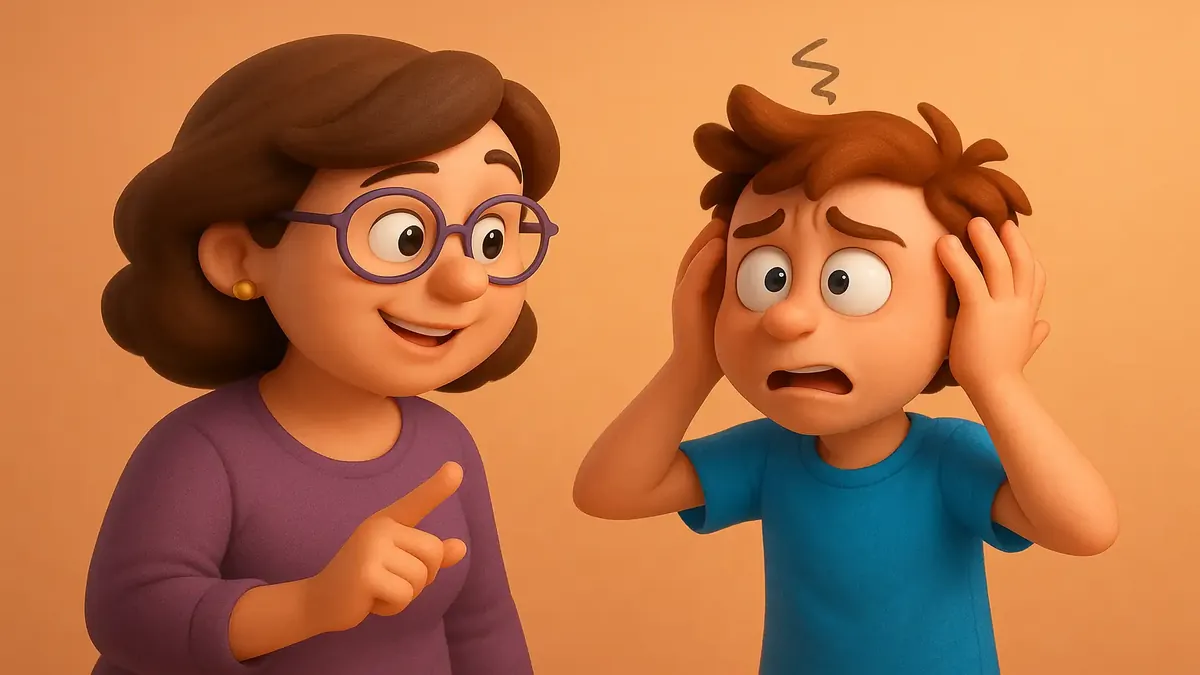
Picture this: it’s an ordinary day, and you’re grumbling about life’s little annoyances to your mom. Suddenly, the conversation takes a left turn into the world of dyslexia—and what unfolds is the type of logic-tangling, laugh-inducing exchange that only families can deliver. That’s exactly what happened to Redditor u/Abandonedkittypet, whose mom declared with unshakable confidence: “Dyslexia doesn’t affect your reading, just your writing.”
Cue the sound of mental brakes screeching to a halt. Was this just a simple mix-up—or the opening scene of a modern comedy of errors? Either way, Reddit was hooked.
The Family Feud: Who Knew Dyslexia Could Be So... Debatable?
Let’s set the stage: You’re trying to explain your point, dictionary definition in hand, but your mother’s memory of your first-grade spelling mishaps stands firm. According to her, dyslexia is all about those backwards letters in spelling—not the actual reading part.
As u/Abandonedkittypet recalls, “Mama. It’s a reading and writing disorder.” But mom’s defense? “When you were in first and second grade they thought you had dyslexia because you spelled your words backwards, don’t call me a liar!” The debate hits a standstill, dictionary at the ready, but mom’s not budging. Classic family logic: “It happened to you, so I must be right!”
This story isn’t just hilarious—it’s a perfect snapshot of how myths and misunderstandings about learning differences can persist. And Reddit? Well, Reddit had thoughts.
Community Wisdom: Myths, Mix-Ups, and the Comfort of Kevin
The r/StoriesAboutKevin crowd wasted no time weighing in. The top comment, from u/Sistamama, went straight for the funny bone: “I’d still call her a lair, though.” (Get it? Liar/lair? Spelling jokes always win on a dyslexia thread.) The original poster, ever the good sport, replied, “Dang it! Thanks for catching that, I’m terrible with spelling :’), not dyslexic tho.” Even grammar gets a cameo, as u/findthesilence chimed in: “As long as you don’t say ‘I would of...’”
But humor aside, the thread also became a mini masterclass in learning differences. u/WomanInQuestion wondered if mom might be confusing dyslexia with dysgraphia—a lesser-known but very real cousin. That’s the disorder where writing, rather than reading, is the main challenge. OP agreed: “Maybe, I could see her misremembering... her entire basis for dyslexia was the fact that I was nearly diagnosed 12/13 years ago.”
Then there’s u/snailgorl2005, bringing the science: “Except it does actually affect your reading as well as your ability to spell and form letters correctly beyond what is considered to be developmentally appropriate... Children with dyslexia also are slower readers because their brains are trying to make sense of what is on the page. Reading written language is EXTREMELY difficult. There is a lot to it.” If you’ve ever wondered why reading can feel like deciphering hieroglyphics for some, that’s why.
Others jumped in with personal stories and hacks. u/JaschaE shared a wild tale of learning to read upside down—and, fun fact, some people with dyslexia actually do find it easier to read that way, as u/katiekat214 added: “Some people with dyslexia read better upside down because it forces their brain to slow down.” Color overlays and background tweaks can also help. The more you know!
Dyslexia, Dysgraphia, and the Land of Learning Differences
So what’s the real deal? Dyslexia is, by definition, a reading disorder—but it doesn’t stop there. It commonly affects spelling, writing, and even how letters and words are perceived and processed. Think of it like your brain’s spellcheck is permanently set to “experimental mode.” As u/Captain_Hammertoe explained, dysgraphia is its own beast: “I read just fine, but when I try to write... something in my brain just kind of short-circuits when I ask it to visualize a symbol and reproduce it.” For some, the struggle is with reading; for others, it’s the act of writing itself.
The bottom line? It’s complicated! There’s no one-size-fits-all definition, and plenty of kids make letter reversals when they’re learning to write. As u/snailgorl2005 points out, it’s only a concern if it persists past those early years—otherwise, it’s just part of growing up.
And because this is Reddit, there’s always someone ready to take things in a whole new (and hilarious) direction. u/DamnitGravity quipped, “I’d rather have dyslexia than sexlexia.” To which u/xenchik replied, “It’s a very sexy learning disability, Kif.” Thanks, internet.
The Takeaway: Debating with Family Is a Universal Language
If you’ve ever tried to explain a complex topic to a stubborn family member, you know the struggle is real. And sometimes, the best you can do is pull out the dictionary and hope for the best. Whether you’re an expert on learning differences or just along for the ride, there’s always something new (or at least funny) to learn from a good family debate—and from the collective wisdom of the internet.
So, next time someone tells you dyslexia is “just about spelling things backwards,” you’ll be ready—with facts, personal stories, and maybe a few puns in your back pocket.
Have you ever had a debate like this with your family? Got a funny or enlightening story about learning differences? Share your thoughts in the comments below—because if there’s one thing this story proves, it’s that we all have a little “Kevin” in us when it comes to family logic.
And remember: when in doubt, check the dictionary... or just ask Reddit.
Original Reddit Post: Dyslexia isnt a reading disorder!