Paper Airplanes, Diet Pepsi, and the Art of Malicious Morale-Building
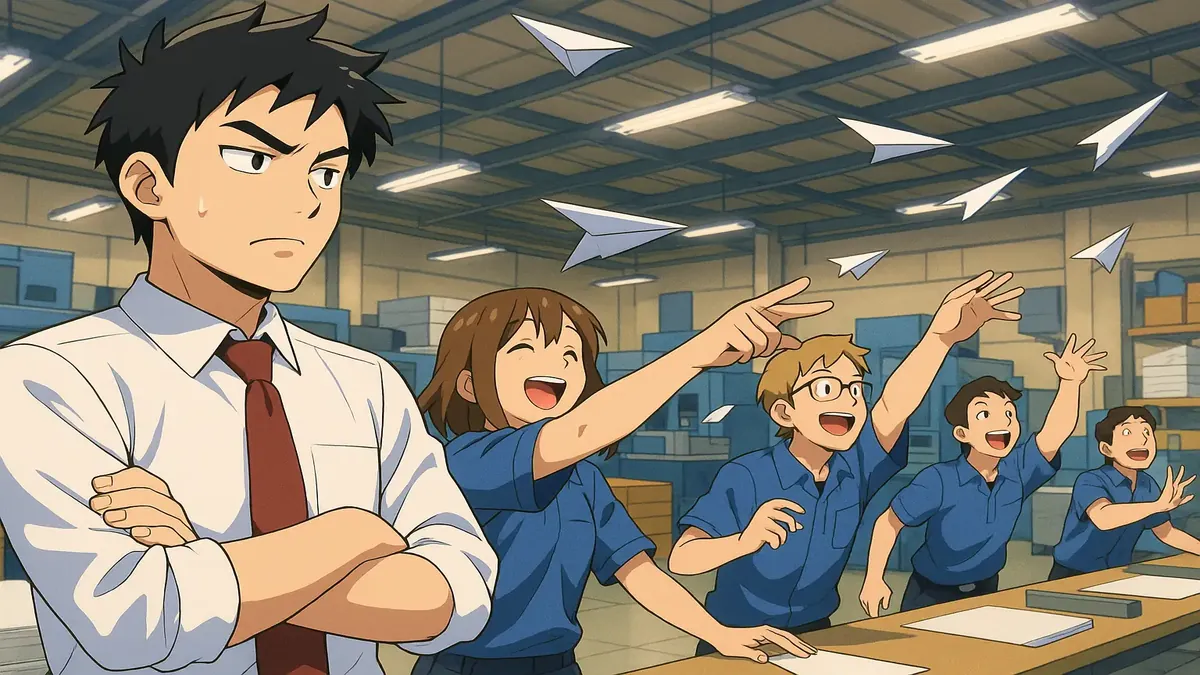
Picture this: You’re knee-deep in mandatory overtime, working twelve-hour shifts, seven days a week, in the humming, inky heart of a commercial print shop. You’re exhausted, your team’s spirits are lower than the ink levels on the last press run, and management’s only guidance is, “I don’t care what you have to do to improve morale, just do it.”
What’s a supervisor to do? Well, if you’re Redditor u/2BallsInTheHole, the answer involves shutting down the entire building, launching the Great Paper Airplane Olympics, and later, orchestrating a sticky Diet Pepsi and Mentos experiment in the parking lot—all on the clock.
But what happens when the C-suite catches wind of these shenanigans? And what can we learn about corporate culture from the community’s reactions? Let’s take a closer look at one of r/MaliciousCompliance’s most airborne tales of employee engagement.
When Morale Hits Turbulence: The Power of Play
Managing burnout is tough, especially when "mandatory overtime" is basically your job title. In this story, the OP took a bold, creative approach: “I shut down production in the entire building. I gave them instructions to make the best paper airplane they could out of any piece of paper they can find in the shop. I stood at the end of the shop and judged whose plane flew the farthest and gave him the rest of the day off with pay.”
Was it disruptive? Sure. Did it work? Absolutely. As OP later confirmed in the comments, “Yeah, It was like a mini impromptu Christmas party.” Sometimes, small, silly things mean a lot—something u/la_winky echoed, marveling, “Why some management doesn’t get this is beyond me.”
And the fun didn’t stop there. Once OP discovered the Diet Pepsi and Mentos phenomenon (and if you haven’t seen it, think: science fair meets geyser), the team spent a half-hour in the parking lot, on the clock, cackling over sugary explosions. The total cost? Probably less than a case of printer toner.
C-Suite Catches On: The Inevitable Clampdown
Inevitably, word of airborne gliders and cola fountains reached the higher-ups. The COO, who’d initially issued the improve-morale-or-else order, was less than thrilled. “You did what? Anymore incentives that cost the company money will have to go through me now.” Classic.
This reaction prompted a wave of Reddit commentary, ranging from the sarcastic (“The beatings will continue until morale improves,” quipped u/VinylHighway) to the pragmatic. As u/EntranceFeisty8373 noted, “How much does a two-liter bottle of Pepsi and some Mentos cost? I’m sure they weren’t happy about the ‘loss’ to productivity, but they’ll lose a lot more if their employees hate coming to work.” And as u/solakv pointed out, the real risk is losing workers altogether: “They’ll also lose more productivity if their employees go to work somewhere else.”
Some commenters pointed out the irony that the COO didn’t even notice production had stopped until much later. As u/grumblyoldman observed, “The fact that he didn’t notice that production had been shut down and the whole staff was out in the parking lot for half an hour tells me that nothing really needs to go through him as long as you’re meeting deadlines.”
Community Commentary: The Many Forms of Morale (and Malice)
Reddit’s take on this story is a masterclass in workplace wisdom, sarcasm, and a little bit of nostalgia. Some saw it as the purest form of malicious compliance—doing exactly what was asked, but not in the way management envisioned. Others debated whether it was compliance at all, or just good leadership.
The story also sparked memories of similar moments. u/unknown_user250 reminisced about their own paper airplane competitions: “It was great!!!” Meanwhile, others drew parallels to TV classics, like the MAS*H episode where overworked doctors needed to blow off steam with a bonfire. Sometimes, the best solution to a morale problem is simply to let people be people.
Of course, not everyone saw it as a win. Some, like u/ZombieBait2 and u/dreaminginteal, questioned whether this was truly “malicious compliance” or just “pre-compliance.” Still, the consensus seemed to be that fun, low-cost morale boosters are both effective and undervalued by many companies.
And let’s not forget the creative suggestions: u/ZirePhiinix wondered if anyone had simply balled up paper and thrown it for maximum distance. (OP’s response: he made the largest airplane possible out of a 23x35 inch press sheet—now that’s thinking big.)
Lessons in Leadership: It’s Not About the Money
So, what’s the real takeaway? As u/bolshoich put it, “Morale is an investment. Think of the ROI before you complain about costs.” The return on a few minutes (or even an hour) of play is hard to quantify, but its impact on engagement, retention, and productivity is real.
As companies increasingly look for ways to “do more with less,” it’s worth remembering that sometimes, the cheapest investment—a moment of fun, a gesture of appreciation, a shared laugh—can yield the biggest results. Or as u/Lylac_Krazy described from their own experience: “I just spent the right money to make things move along the way they should. Even when it comes to people, it’s still the right tool for the right job.”
In the end, whether it’s paper airplanes, Pepsi fountains, or just a bit of unscheduled downtime, the best leaders know when to take their foot off the gas—and let their team take flight.
Conclusion: Your Turn—What’s Your Favorite Morale-Boosting Hack?
Have you ever staged (or witnessed) a legendary workplace morale-booster? Do you think the best motivators cost money, or is it all about creativity? Share your stories, thoughts, or wildest “malicious compliance” moments in the comments below—let’s keep the conversation (and the paper airplanes) flying!
Original Reddit Post: 'I don't care what you have to do to improve morale, just do it.'