Print, Scan, Shred, Repeat: The Bizarre Tale of Sneakernet in a Japanese Office
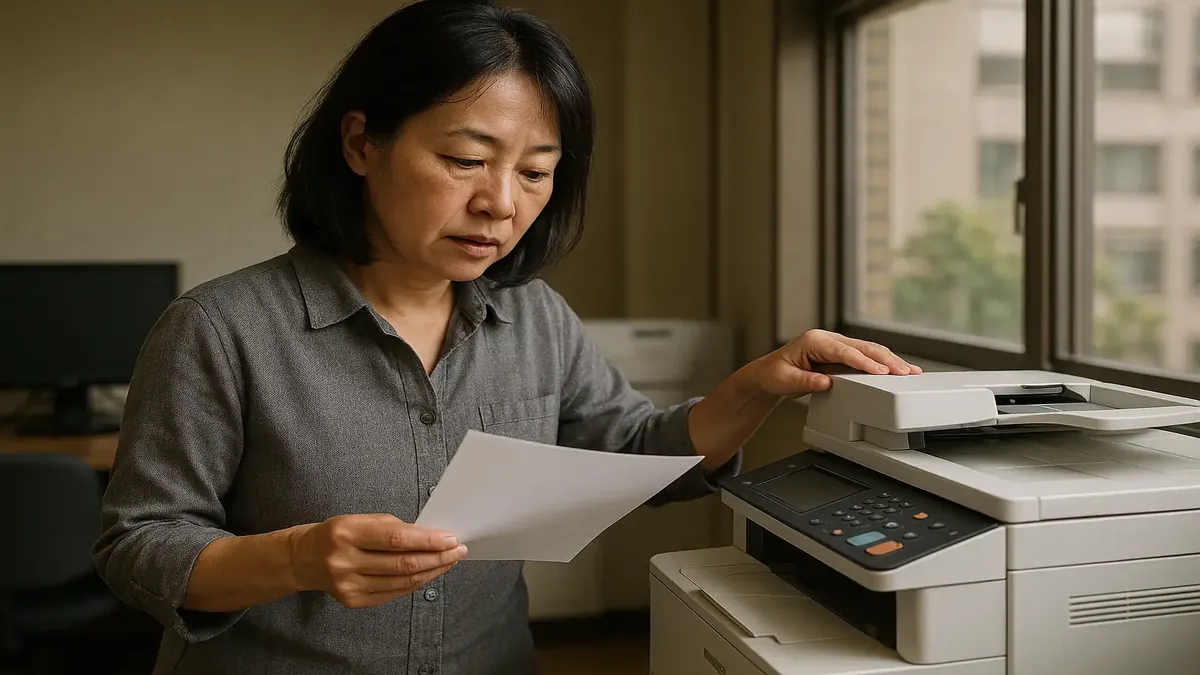
Have you ever wondered what it would look like if someone tried to move digital files between computers—but decided to make it as complicated as possible? Welcome to the tale of “Paper in Japan,” a viral post from r/TalesFromTechSupport that has the internet alternately laughing and cringing.
Imagine this: you’re the “not-techy” new hire, and your mid-40s Japanese colleague offers to train you on a process for moving a file from Computer A to Computer B. You brace for something complex—maybe navigating an arcane internal network. Instead, you get an impromptu masterclass in technological time travel: print, scan, upload, download, save, and—don’t forget—shred.
Let’s dive into this real-life episode of “Office Space: Tokyo Drift,” and see what the Reddit commentariat had to say about it.
The Office Workflow That Time Forgot
The story, as told by u/ThePianisst, is simple but mind-boggling. The entire workflow to “move a file” involved printing the document from Computer A, physically walking it to a copier, scanning it into the cloud, downloading it onto Computer B, and then saving it to the right folder. The pièce de résistance? Shredding the original printout.
The OP writes, “I couldn’t believe what I was seeing and asked her if I could try another way.” With a few clicks and a drag-and-drop in Microsoft Teams, the same file zipped across the network—no trees harmed, no sneakers worn thin. The reaction? Years of paper-based Rube Goldberg machinations, undone in a minute.
Redditors were floored. As u/skeletonchoji quipped, “A flash drive would be better than her way.” Others invoked the classic “sneakernet”—physically carrying files between computers, a practice that, in the age of cloud storage, seems as quaint as using a carrier pigeon (which, as u/af_cheddarhead pointed out, actually has an Internet Protocol RFC dedicated to it).
Culture, Custom, and the Comfort of Paper
But why would someone stick to such an arduous process? The comments revealed this is more than a one-off oddity—it's a window into deeper workplace habits and cultural quirks.
One top comment by u/grond_master recalled a documentary about major tech companies’ Japanese offices: “As it turns out, that sales office did not have any computers at all. Thing is, computers at that time operated only in English, while the Japan office operated in Japanese, so the office itself had no use for computers. So while they sold computers, they did not use them per se. A lot of these things are holdovers from that era.”
The thread is sprinkled with stories of similar workflows: church newsletters retyped from printed emails, scanned-and-emailed web pages for online shopping phobics, and even air-gapped government systems where digital transfer is strictly forbidden.
Some, like u/saoirse_eli, speculated about the role of Japanese work culture: “Was she really bad at it or was she just Japanese? ... you already have a big part of Japanese work culture.” But the OP clarified, “We had a lot of ‘it’s a stupid way but that’s the way’ but this wasn’t one of them unfortunately. She just was the way she was.” Sometimes, it’s not about bureaucracy—it’s just personal comfort or habit.
When Digital Transformation Goes Sideways
If this sounds like an isolated incident—think again. One of the most upvoted comments, from u/mkaibear, described how a company’s push to go paperless quadrupled their paper consumption. Staffers printed, scanned, and shredded so many documents that the new “digital” workflow actually made things worse. As u/maceion wisely noted, however, “An archive paper copy has saved lives in [the] UK, when medical systems went down.” Redundancy can be a lifesaver, but mindless rituals rarely are.
And then there’s the human factor—people just want to get their cheese, as u/showyerbewbs put it. New tools and better workflows are great, but for many, “they don’t give a sh*t. They just want to know how to get their cheese.” Once a workflow is established, inertia is king. Even when shown a better way, some users stick to their trusted print-scan routine.
The Real “Cloud” Is Made of Paper Dust
The comments spiral into both empathy and exasperation. One user joked about optimizing the process further—why not set up an endless paper loop from printer to scanner to shredder, with an intern to track which pages are actually important? Redundant? Yes. Hilarious? Absolutely.
Others pointed out the psychological comfort of paper. For many, a physical copy feels more real, more trustworthy, and more “done” than a file you can’t hold in your hand. That’s not just a Japanese thing; it’s a universal quirk, as stories from all over the world attested.
And sometimes, people just don’t know there’s a better way. As u/InteractionHairy6112 shared, a colleague was converting Word docs to PDFs by printing and scanning—until shown the “Save as PDF” option. Old habits die hard, especially when nobody has ever shown you the alternative.
Conclusion: Are You Still Printing and Scanning?
So, what’s the lesson from this tale? Technology is as much about people as it is about machines. Whether it’s cultural inertia, fear of change, or simply not knowing any better, inefficient workflows can persist for years—until someone new (and brave) asks, “What if we didn’t do it this way?”
Now it’s your turn: What’s the weirdest workflow you’ve ever encountered at work? Have you ever had to gently (or not so gently) drag a colleague into the 21st century? Share your stories in the comments—and remember, there’s no shame in learning a new trick, even if it saves a forest or two.
Don’t forget to hit share—maybe someone you know is still living in the land of print, scan, shred, repeat!
Original Reddit Post: Paper in Japan