Route Engines, Rage, and the Wild West of '80s Tech Support
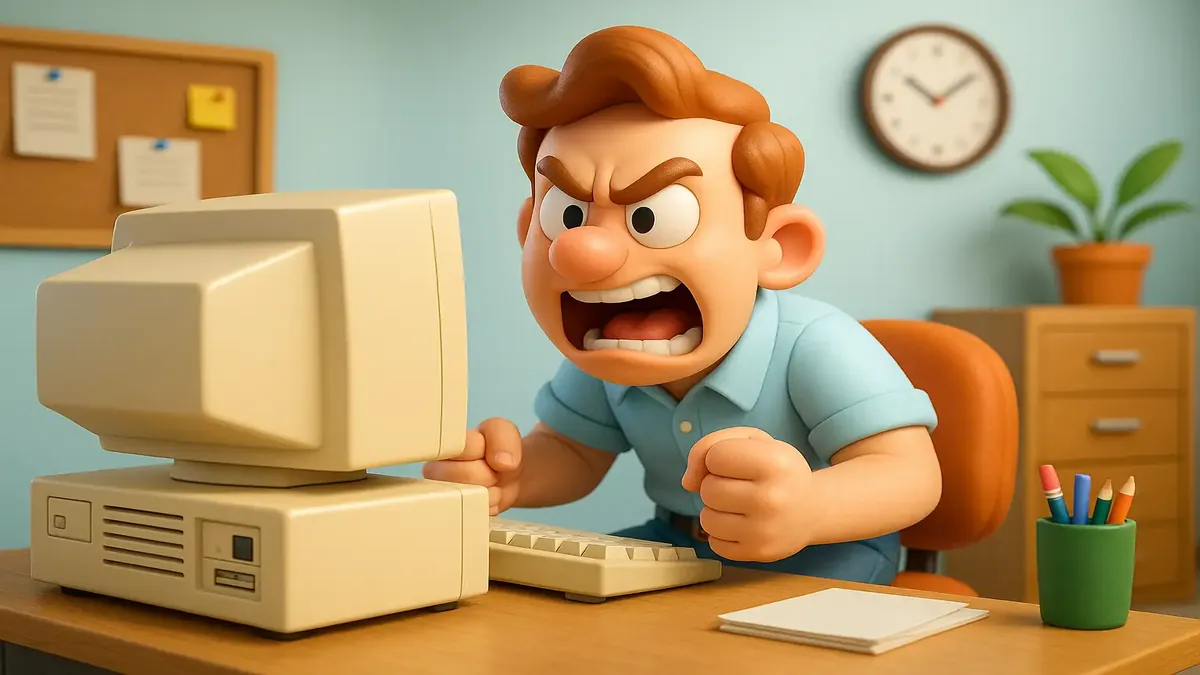
Let’s hop in the digital DeLorean and head back to the 1980s: floppy disks spun, computers booted up with the drama of a soap opera, and customer support was a contact sport. In this story from Reddit’s r/TalesFromTechSupport, we’re treated to a hilarious and hair-raising glimpse into the wild world of early electronic design automation (EDA) support—where the real bugs weren’t just in the code, but sometimes on the other end of the phone.
Picture this: an applications engineer, fresh out of college, thrown into the deep end of supporting custom-built “Route Engines”—beefy, headless Unix machines with as much personality as a cinder block and about as much patience as their most difficult customers. When a customer’s rage boiled over into threats and—later—a headline-making crime, it was just another day in the circuit jungle.
When Debug Monitors Were Optional (But Shouldn’t Have Been)
Back in the mid-80s, supporting a Route Engine wasn’t for the faint of heart or the thin-skinned. These were headless workhorses—no monitor, no keyboard, and definitely no hand-holding. They ran on Unix booted from a 5¼” floppy disk, and if a job went sideways (say, a memory-hungry task brought it to a halt), the only way to know what happened was to plug in a “debug monitor” to the serial port.
Of course, as the story’s original poster (u/bwade913) explains, debug monitors were “strongly recommended,” but not supplied. Instead, customers were expected to source their own. Unsurprisingly, many users—especially those transitioning from the tactile world of tape and light boards—found these machines as intimidating as they were inscrutable.
One commenter, u/djdaedalus42, reminisced about the era’s resistance to newfangled tech: “There was a lot of resistance from old-line EE's, but mostly it was about rejecting new ways of looking at the problems.” To these veterans, hierarchical schematics and serial terminals seemed as alien as moon rocks.
Hotline Hysteria: Customer Support Meets Chaos
But hardware limitations were nothing compared to the volatile cocktail brewing on the customer hotline. Our protagonist recounts a particularly “memorable” (read: infamous) caller who, after verbally eviscerating the phone screener to tears, demanded immediate support—protocol and human decency be damned. Most companies would have blacklisted him, but as fate (and corporate nepotism) would have it, the customer had ties to the company’s founder. So, the tech lead and his manager paid a personal visit.
Their mission? Teach the art of the debug monitor and the sacred rite of fsck to a man who, by all accounts, was “untrainable.” It didn’t help that, as u/Beginning_Method_442 chimed in, “Ahhhh.. the memories you invoked! I, too, worked on similar devices.” The consensus: these were not user-friendly systems—especially for those who’d never so much as seen a command prompt.
In the end, the only workable solution was to hand over a stack of ten boot floppies, with instructions: “If the Route Engine fails, just pop in a new floppy. When you run out, call us.” The customer’s response? A classic ultimatum: “It better [work] or I’ll come over and trash the place.” Not exactly the gratitude you hope for after a house call.
The ‘80s: Decade of Big Hair, Big Threats, and Bigger Tech Troubles
The community wasted no time dissecting this tale. “Leaded gasoline was a hell of a drug, I guess,” quipped u/RavenCarver, summing up the decade’s heady mix of aggression and obliviousness. u/curtludwig took it up a notch: “It was the '80s, the decade of cocaine...”—to which u/MrHappyHam deadpanned, “Cocained gasoline seems wasteful.” If customer service was a contact sport, then the '80s were its gladiatorial heyday.
Another commenter, u/ThunderDwn, nailed the story’s crescendo: “Well, that escalated quickly....” Indeed. Not long after threatening the tech team, the customer made local headlines for kidnapping his estranged wife at knifepoint—a development that, while shocking, seemed almost a natural extension of his previous behavior. As the OP reports, “We never heard from him again.”
Tales From the Trenches: Lessons and Laughs
Besides the drama, there’s real camaraderie among EDA veterans in the comments. u/djdaedalus42 pointed out that the only thing worse than an EE working on board layouts was an EE trying to write software—a sentiment that drew laughs and knowing nods from those who’d witnessed such horrors firsthand.
u/bwade913, the tale’s author, offered a window into the spectrum of customers—from hands-on layout guys to PhD designers—preferring the professionalism of engineers over the unpredictability of the untrained. The consensus: supporting early EDA tools was as much about managing people as it was about managing machines.
Conclusion: When Tech Support Was an Adventure
Stories like this remind us how far we’ve come—and how much we owe to the pioneers who braved the front lines of tech support with nothing but a stack of floppies and a sense of humor. Whether it’s a runaway Route Engine or a customer on the edge, there’s always a story worth sharing.
Have you survived a wild tech support tale, or tangled with legacy hardware in the trenches? Share your stories—or your favorite ‘80s tech memories—in the comments below. And remember: always keep a spare boot floppy handy. You never know who might call next.
For the full original story and more wild tales from tech support, check out the Reddit thread.
Original Reddit Post: This better fix my problem or I'll come over and trash the place