Service Animals vs. Emotional Support Animals: Hotel Horror Stories and the Great ADA Debate
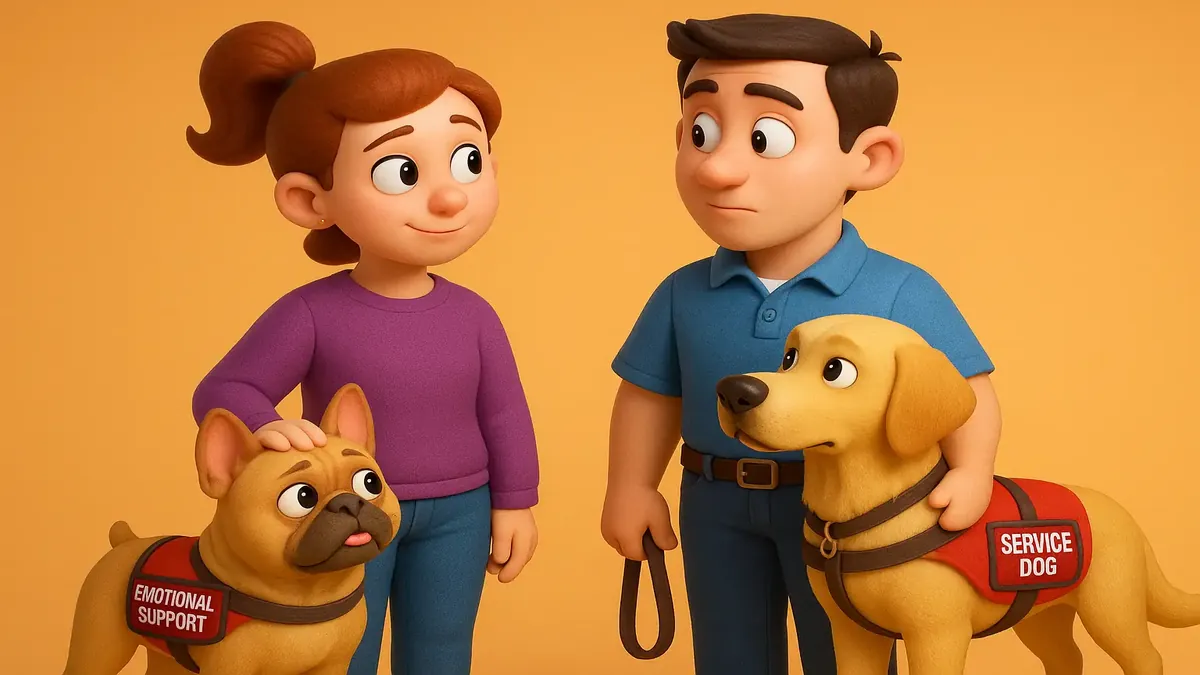
The front desk of a hotel is a crossroads of humanity: late check-ins, lost keys, wild excuses—and, increasingly, the rise of the “service animal” that may or may not be just someone’s slightly spoiled Pomeranian. If you’ve ever wondered what really happens behind the counter when a guest rolls up with a dog, a certificate, and a story, buckle up. The difference between a service animal and an emotional support animal (ESA) isn’t just a legal technicality—it’s a daily drama, a legal landmine, and sometimes, a comedy of errors.
Hotels across America are grappling with a tidal wave of guests claiming their pets are service animals. But when does a helpful companion become just another barking headache for staff? And why does it always seem to end with someone threatening to sue?
The (Surprisingly Simple) Law of the Land
If you thought there was a secret government registry of service dogs (with little vests and badges), think again. According to the Americans with Disabilities Act (ADA), staff at hotels and other public accommodations can only ask two questions: “Is the animal required because of a disability?” and “What work or task has the animal been trained to perform?” You can’t ask for paperwork. You can’t ask about the person’s disability. And, as u/SkwrlTail aptly points out, there’s no such thing as an official “ADA Certified” service animal—any paperwork claiming so is a giant red flag.
In fact, as the original poster [OP] u/The_Lore_Whore shares, hotel staff are often trained to avoid paperwork altogether, mostly to dodge legal headaches. “Honestly? I wish there was just a card. I’d rather deal with an influx of fake service animals than deal with people angry because they can’t answer the questions.” The irony? There’s a cottage industry selling fake certificates and vests, but none of it is legally valid. As u/Helenesdottir bluntly puts it, “If the animal is a service animal, paperwork is irrelevant. If it’s not, the paperwork is fraudulent.”
Service Animals vs. Emotional Support Animals: Know the Difference
Let’s get this out of the way: Service animals are covered under the ADA. Emotional support animals are not. That’s right—your emotional support iguana isn’t guaranteed a hotel room, no matter how soothing its scaly presence. Service animals (almost always dogs, sometimes miniature horses) are trained to perform specific tasks for people with disabilities—guiding the blind, alerting to seizures, or fetching medication.
ESAs, meanwhile, provide comfort just by being there. Important? Sure. Legally protected? Not really. As u/Campcook62 clarifies, federal law is crystal clear: “The ADA does not have any rules regarding Emotional Support Animals.” And as u/FuzzelFox notes, even a legit service animal loses its welcome if it starts misbehaving—barking, biting, urinating indoors, or being left alone in the room.
OP’s experience? “Everyone I’ve ever dealt with with an emotional support animal has just been a nightmare human being. Meanwhile their dogs are usually barking at people or jumping against the counter.” Yikes.
The Real Telltale Sign: Behavior (Not a Piece of Paper)
You might think the trickiest part for hotel staff is sniffing out the fakes. But often, the dogs do it for them. “A service animal walks next to the owner, sits unprompted when the owner reaches the counter, doesn’t bark, doesn’t sniff around, doesn’t pee on the carpet—partially because the $50k training wasn’t wasted on them and they have a job to do,” writes u/DogFishBoi2. In contrast, the faux service animals are typically the ones causing chaos in the lobby, barking at guests, or leaving “presents” on the carpet.
And here’s the kicker: Even if someone claims their animal is a service dog, staff can—and should—ask them to leave if the animal is disruptive. As u/Mrs0Murder points out, “Just so you know, if the dog [is] causing a disturbance that is enough justification to conclude it’s not a service dog... They do not bark at other guests or animals, nor do they get on furniture.”
But what happens when you confront someone about their misbehaving “service animal?” Prepare for fireworks. “I got SCREAMED at by ignorant guests last week over their emotional support dog that was barking, complete with one of those fake certificates,” recalls u/dman2life. “They tried to hit me with the ‘you can’t ask ANY question, you don’t need to know my problems’—like lady, just make up a task, I don’t care enough if you wanna lie.”
The Internet’s Solutions—and a Dose of Reality
So what’s the fix? Many commenters wish for a national registry or official card—something simple to cut through all the drama. But as u/PlatypusDream and others point out, many service animals are owner (self) trained, and mandatory registration could be a barrier for people with disabilities. And, as u/clauclauclaudia notes, cards and licenses can create new hurdles and privacy concerns.
In the meantime, hotel staff are left to navigate this legal gray zone with patience, empathy, and a laminated printout of ADA-approved questions (as u/Espindonia2 recommends). And if all else fails, as u/YellowBeastJeep suggests, “If someone threatens to sue: ‘I’m sorry. Since you have now threatened legal action, any further conversation needs to go through the legal department. Have a nice day.’”
At the end of the day, it’s not just about dogs or hotel policies—it’s about respecting real needs, spotting the fakes, and (hopefully) avoiding lawsuits and carpet cleaning bills.
Conclusion: Let’s Hear Your Tales!
Have you ever tried to check into a hotel with a pet (or been on the other side of the front desk)? Do you think there should be more regulation—or would that just make things harder for people who genuinely need service animals? Drop your best stories and opinions in the comments below. Just don’t forget to tip your hotel staff—and maybe leave Fido at home unless he can really pass the test.
Let the wild tales begin!
Original Reddit Post: Service Animals vs Emotional Support animals