Technically Correct, Poor Taste: How One Student Beat Their Professor at His Own Game
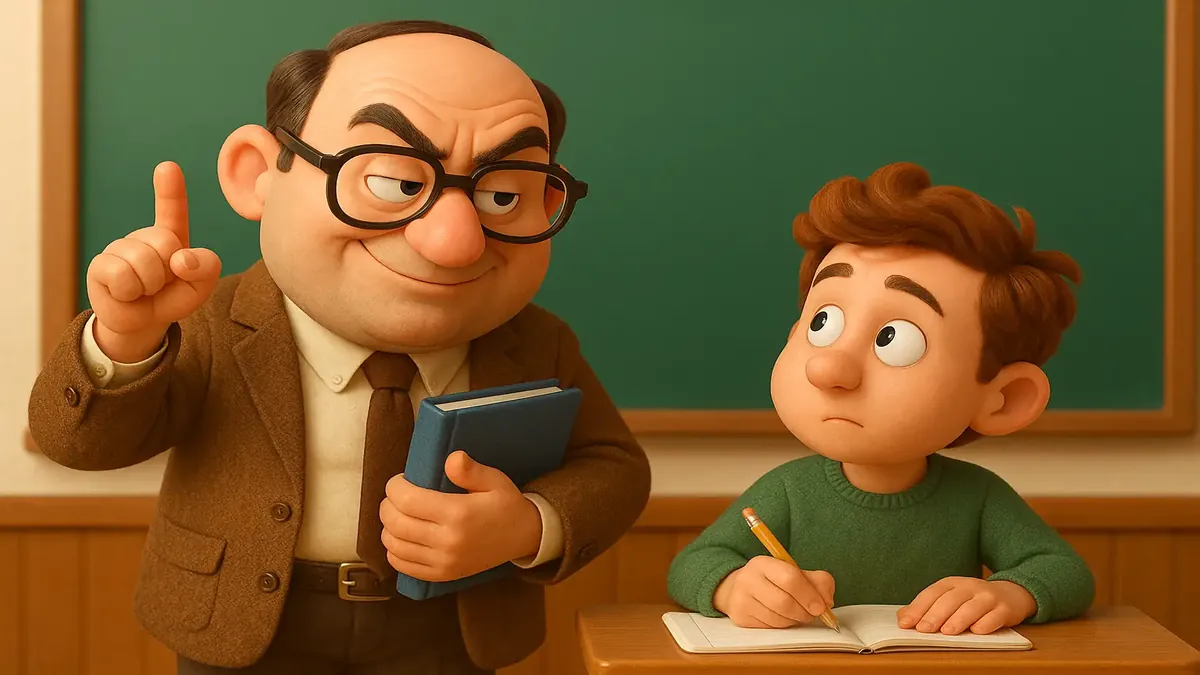
Imagine sitting in a research methods class, watching your professor toss out bold, unsubstantiated claims like confetti. You raise your hand, challenge him, and he waves you off with, “Any source is valid as long as you cite it correctly.” What if you took him at his word—literally?
That’s exactly what happened to Reddit user u/dylan_price11, whose legendary tale of academic mischief on r/MaliciousCompliance shot to the top of the subreddit, racking up over 14,000 upvotes and hundreds of comments. Their story? When the professor set the rules, the student simply played by them… and won. (Sort of.)
The Setup: “Because I Said So” Isn’t a Citation
In the world of academia, the phrase “my word is law” doesn’t exactly fly. But that didn’t stop “Dr. K” (as the professor is pseudonymously named) from adopting a classic “I have a PhD, so trust me” stance in lectures. According to the OP, Dr. K would make sweeping claims—sometimes even contradicting himself—then get testy if students dared to challenge him.
During one memorable class, Dr. K pronounced a statement about consumer behavior that flew directly in the face of what u/dylan_price11 had read in peer-reviewed literature. When challenged, Dr. K doubled down: “In this class, any source is valid as long as you cite it correctly. The quality of your argument is what matters.”
Cue the mental gears turning.
The Coup: Citing the Source—Literally
Armed with the professor’s own words, our protagonist set out on a mission worthy of any bureaucratic hero. For their next paper, they argued the exact opposite of Dr. K’s claim—using as their main source… Dr. K himself. Specifically, they transcribed a previous lecture where he’d said something that actually undermined his later position.
Meticulously following the citation guide, u/dylan_price11 cited the lecture as: [Last name, First initial. Class lecture, Course number, University name, Date.]—exactly as instructed. The professor’s reaction? “Interesting argument, strong structure,” followed by the immortal line: “this citation is not acceptable, please see me.”
But our hero came prepared, citation guide in hand. After a tense pause, Dr. K grudgingly raised the grade from a B+ to an A-, conceding that the citation was “technically valid but in poor taste.”
As OP later reflected in the comments, “I have never felt more seen by a grade in my life.”
The Community Reacts: Technically Correct (The Best Kind of Correct)
Reddit’s hive mind immediately recognized the brilliance—and the delicious irony—of the move. “The fact he upped your grade after being proved wrong, lmaoooooo,” cracked u/SmolHumanBean8, to which OP replied, “the A- still stings a little but ‘technically valid but in poor taste’ is honestly a compliment I think about sometimes.”
This phrase quickly became a rallying cry, with commenters suggesting it would make “awesome flair” or the perfect book title for all things “technically correct but the person pointing them out is a dick for doing so” (thanks, u/Many-Wasabi9141).
Some, like u/LendersQuiz, invoked the legendary Futurama meme: “You are technically correct—the best kind of correct.” Others, like u/Street_Roof_7915 (a self-professed college professor), weighed in: “Academia is literally about arguing with each other. It’s not in poor taste to say you said X and here is research that argues against that. He was a whiny baby.”
But not everyone thought Dr. K was without merit. “That actually shows he has some integrity,” wrote u/Broad_Respond_2205, pointing out that at least the professor changed the grade after being presented with a valid argument.
Citation Wars: When the Rules Come Back to Bite
The saga sparked a flurry of hilarious and insightful war stories from both students and teachers. One librarian, u/Logophage_, noted that most style manuals “absolutely have formats for citing a lecture,” and that “these days, there are formats for everything up to and including a TikTok.” The real lesson? Just because you can cite something, doesn’t mean it’s a quality source—but that’s not what Dr. K told the class, is it?
Several instructors chimed in with tales of their own. u/HoundstoothReader, who teaches research methods, declared they’d “legitimately give extra credit for this” after recovering from the sheer shock that “one of my students actually listened to me and took notes.” Others recounted stories of citing their own or their teachers' work—sometimes to the amusement, sometimes to the chagrin, of the grading authority.
Of course, the episode also sparked philosophical debates about “taste” in academia. As u/No_Group5174 wryly asked, “Since when is ‘taste’ a valid scientific argument?” And u/Budsygus nailed the underlying power dynamic: “Calling it ‘in poor taste’ is just his way of saying ‘Don’t make me look stupid again.’”
The Takeaway: Rules, Rebellion, and the Spirit of Inquiry
So what’s the moral of the story? Sometimes the best way to test authority is to take it at its word—and sometimes, that word comes back to bite. As u/VP-of-Vibes insightfully put it, “The professor made a structural error. He built a rule that assumed his authority and then announced the rule in front of witnesses. All you did was apply it consistently.”
In the end, the real winners are those who question, challenge, and—yes—even comply maliciously, all in the service of learning. As OP so perfectly summed up, “the fact that he changed [the grade] and acknowledged the argument meant something, even if he couldn't fully let go of the last word.”
So the next time a professor lays down the law, remember: Be careful what rules you make. Your students just might follow them—better than you ever expected.
What’s the most “technically correct” (but maybe in poor taste) thing you’ve ever done to prove a point? Share your stories in the comments below!
Original Reddit Post: my professor said any source is valid as long as I cite it properly. so I cited him.