That Awkward Moment When Reading the Instructions Could Save Your Dignity (and Your Gasket Maker)
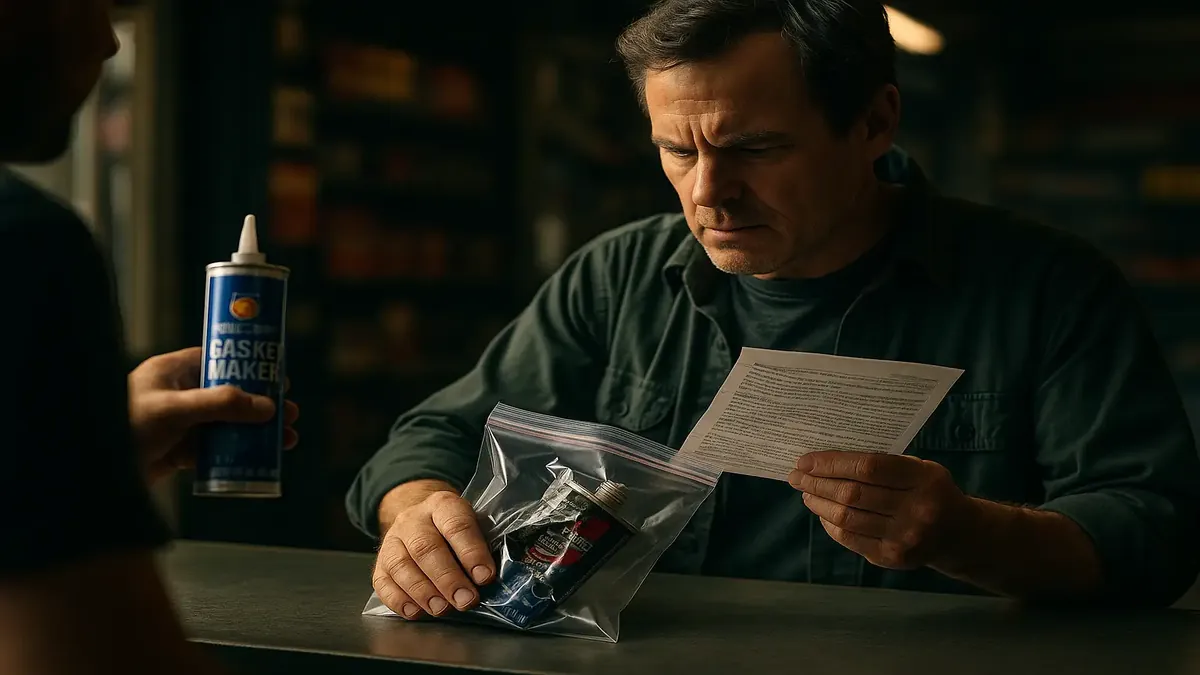
There’s a special kind of panic that sets in when you’re elbow-deep in an automotive repair, only to discover your “lifesaving” product refuses to work. But what if the product isn’t broken—just misunderstood? Today, we dive into a true retail saga where a little patience, a twist of the wrist, and (gasp!) reading the instructions could have saved one customer a whole lot of embarrassment—and a perfectly good can of gasket maker.
When “Defective” Means “Didn’t Read the Label”
Our story starts innocently enough. Picture a college student working at a bustling auto parts chain, only to be confronted by a customer wielding a shredded can of gasket maker in a Ziploc bag. The customer, convinced the product was defective, had resorted to brute force—ripping the can apart to access the sealant and finish his repair. Frustration radiated off him like exhaust fumes—he was convinced he’d been sold a lemon.
Determined to get to the bottom of things, our retail hero grabbed a fresh can off the shelf and put it to the test. Twist, squeeze… nothing. The customer, emboldened, declared all the cans must be bad and began a dramatic “bad, bad, bad!” parade down the aisle.
But then, a glimmer of hope: a tiny instruction—Twist top clockwise [down] to apply product. Our protagonist twists the top down (not off), and voila! Sealant emerges, crisis averted. The customer, sheepish and red-faced, finally admits defeat. “Oh.” He quietly swaps his mangled can for a new one, and everyone goes about their day—except now, the legend of the misunderstood gasket maker is born.
The Universal Struggle: Instructions, Peelies, and Product Angst
If you’re thinking, “Wow, who DOESN’T read the directions?”—well, just check the comments. This tale struck a major chord with the r/TalesFromRetail community, sparking a flood of “me too!” moments and hilarious confessions about instruction-related mishaps.
One of the most upvoted responses, from u/thorn312, tells of a customer who returned not one but two microscopes, furious about “scratches” on the lens. The culprit? The protective film, which only needed to be peeled off. As u/amputect admitted, sometimes the simplest mistakes—like missing a peely on a stove panel—can have us cursing manufacturers for “not making things like they used to,” only to realize we’d skipped a step (or five).
And who can forget the classic scenario of a digital timer stuck on “12:00”? As u/FairBaker315 recounted, the “broken” display was actually just printed on the plastic screen protector. Three grown adults missed it before a store employee saved the day with a single satisfying peel.
This isn’t just about auto parts, either. From water bottles with “mysterious” locks (u/fckinfast4), to mowers that won’t run because of a hidden dust cover (u/Late-Lifeguard142’s now-legendary 25-year-old plastic reminder), to cell phones with muffled speakers due to unpeeled film (u/whamburglar’s family classic)—the struggle spans every product aisle, every generation.
Why Is Reading the Manual So Hard?
The truth is, nobody’s immune. As u/QuotePapa pointed out, “That’s the importance of reading the instructions! Hence why we have warning labels on soap!” But humans are an optimistic bunch—we see a button, a handle, or a cap and assume we know what to do. Instructions? For quitters! (Or, as u/OriginalIronDan joked, “Instructions?!? Only sissies read instructions!!!”)
Yet, there’s also a bit of sympathy for customers. As the original poster (u/el_muerte28) noted, “In all fairness, screwing the top down like you are closing it to get the product out is counter intuitive.” Sometimes, design quirks truly trip us up. And let’s face it: when you’re mid-repair, covered in grease, or hangry for a snack, patience for fine print runs thin.
The community also highlighted that sometimes, instructions are genuinely confusing or poorly placed (thanks, u/K1yco). Ever assembled “useless” flat-pack cardboard only to discover it’s the stabilizing back panel? Or missed the note that says, “If there is no screw, use the latch”? You’re not alone.
Lessons Learned (and a Plea for Manuals)
So what’s the takeaway from this parade of product confusion? First, a little humility goes a long way. Even the most seasoned DIYers, techies, and home cooks have been outsmarted by packaging, film, or a counterintuitive twist-top. As many commenters confessed, it happens to the best of us—and it makes for great stories.
Second, give the instructions a glance before you declare war on your new gadget. It might save you a return trip, a sheepish apology, or a Ziploc bag full of shredded regret.
And finally, if you work in retail, take heart: your patience (and demonstration skills) are appreciated, even when the customer’s pride takes a hit. As u/GoatCovfefe summed up, sometimes a little kindness at the counter helps turn “defective” into “d’oh!”
Conclusion: Share Your Instruction Fails!
Have you ever waged battle with a “broken” product, only to discover operator error? Or rescued a friend from a peely-induced panic? Share your funniest instruction fails in the comments! After all, misery (and laughter) loves company—and maybe, just maybe, your story will save someone else from a Ziploc-bag disaster.
Now, if you’ll excuse us, we’re off to double-check our kitchen appliances for rogue plastic films. Just in case.
Original Reddit Post: Customer claims product is defective, destroys it, and then learns how to read instructions.