The Great Citation Showdown: How Physics Students Drowned Their Professor in MLA
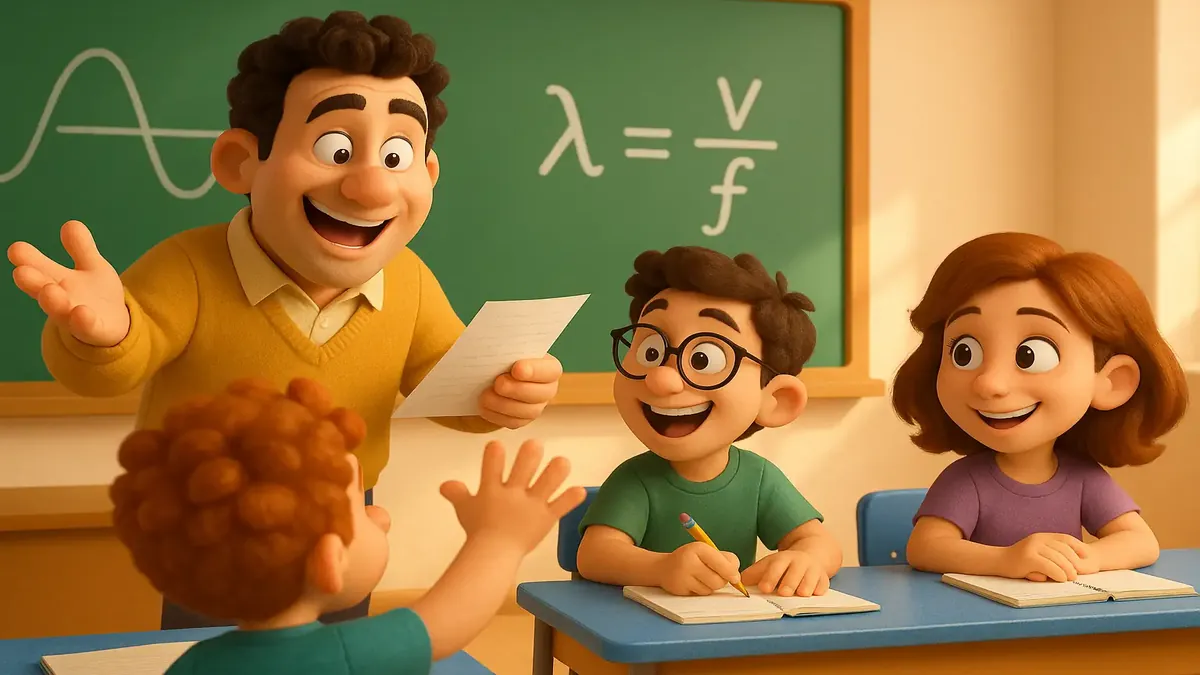
Picture this: a classroom full of budding physicists, minds abuzz with wave mechanics and optics, notebooks open, and calculators at the ready. After the first assignment, the professor—perhaps sensing a teachable moment or maybe just channeling his inner academic gatekeeper—drops a bombshell: “From now on, you must cite your sources for every equation or assumption. I want citations and explanations for everything.” The class groans in unison, but what happens next is a symphony of student solidarity, petty revenge, and citation-style warfare that leaves both the professor and Reddit in stitches.
It’s a tale of compliance so malicious, you’ll never look at MLA format the same way again.
MLA Mayhem: When Citing Becomes a Weapon
The story, originally posted by u/QuantumBobb, unfolds in a second-semester Physics II class of about 32 students. The professor’s request wasn’t your garden-variety “make sure you reference your sources.” No, he wanted every equation, every assumption, every blinking step to be tied back to a source—preferably from the textbook, but open to other origins if necessary.
So what did the students do? They “complied” in the most spectacularly over-the-top way possible. As OP recalled, “damn near the whole class of 32 cited absolutely everything in MLA format.” Homework that once spanned a modest 3-5 pages ballooned to 15-page monsters, each bristling with academic references. For three solid assignments, the professor faced towering stacks of paper—no TA to assist, just him and the infinite footnotes.
Three rounds in, the professor surrendered. He allowed a single closing paragraph of citations instead of the full MLA onslaught. As OP remembers, “it was extremely funny when we all brought up that third assignment and he just dropped his head in defeat as the pile once again looked like a stack of encyclopedias.” The lesson? Never underestimate students’ ability to follow instructions… with a vengeance.
Citation Style Wars: MLA, APA, Chicago, and Beyond
While the professor may have regretted his broad demand, the Reddit community had opinions—lots of them—about the students’ choice of citation style. The top comment, from u/DrTeeBee, hit the nail on the head: “He wasn’t bummed that you cited your sources. He was bummed you used MLA citation style, the worst possible style.” This sentiment echoed across the thread, with u/fer_sure and u/Valerica_Mirwen pointing out that physics professors typically favor APA or even IEEE, not the literature-leaning MLA. As u/stillnotelf put it, “Especially for physics? What a mismatched choice.”
But the students’ selection was no accident. As OP later clarified, the professor never specified a format, so the class “did MLA because it’s terrible.” A little added spice of petty revenge, if you will. “At least it wasn’t in Chicago style,” mused u/Valerica_Mirwen. To which u/4dwarf quipped, “How do you cite sources, deep dish?” Because if there’s one thing students can do better than cite, it’s riff on citation puns.
The Philosophy of Citing in STEM: When to Reference, When to Rage
One of the most insightful threads came from the humanities-vs-STEM debate. In the humanities, rigorous citation is king—every claim, every fact, every idea gets a source. But as OP and several commenters pointed out, STEM is a different beast. As OP explained, “In STEM fields, many things are established fact and/or law. I don’t have to cite ‘Collected Papers on Wave Mechanics (1928)’ to use Schrodinger’s Wave Equation in solving problems in a quantum mechanics course. The citation IS IN THE NAME OF THE EQUATION.”
u/Accomplished-Copy776’s sarcastic, “Heaven forbid you cite your sources at SCHOOL,” sparked a thoughtful reply from OP: “You are saying that it’s entirely reasonable to have to cite every single equation you use in a math class and include an explanation of why you used it?” Others chimed in with real-life stories, like u/harrywwc, who shared their own epic clash with APA7 in a computer science postgrad course, resulting in 4-5 page reference sections and headaches with plagiarism checker Turnitin, which flagged half their references as “similarity matches.”
When Compliance Turns Malicious—and Hilarious
The real heart of this story is the solidarity and low-key mischief of students everywhere. As u/sccartr put it, “You took ‘cite your sources’ and ran with it, honestly worth it for that outcome.” Others, like u/CoderJoe1, joked, “I would’ve cited my lab partner.” The thread is a treasure trove of academic sarcasm, shared pain, and a surprising amount of citation-style snobbery.
But perhaps the biggest takeaway comes from OP’s own reflection: “I will give the prof some slack that what I THINK he was trying to do was to enforce the concept of how you cite prior research in the field… However, doing it in a physics II class where at least half the students won’t even end up getting a physics degree, much less go on to graduate study and publish, is just wild.” In other words, there’s a time and a place for rigorous citation—and sometimes, demanding too much compliance just unleashes the chaos.
Conclusion: To Cite, or Not to Cite (Everything)?
The saga of the MLA-mutiny stands as a hilarious reminder that students are nothing if not resourceful—and united in the face of academic absurdity. Whether you’re team APA, MLA, Chicago, or just cite-your-lab-partner, the moral is clear: be careful what you ask for, especially if you’re not ready for a stack of encyclopedias on your desk.
What’s your take? Ever had a professor make an over-the-top demand? Got a citation war story of your own? Drop your thoughts (and sources) in the comments below—double-spaced, of course.
Source: https://www.reddit.com/r/MaliciousCompliance/comments/1sf7auv/cite_your_sources/
Original Reddit Post: Cite your sources