The Perils of Part Numbers: When Zeros and Letters Collide in Automotive Tech Support
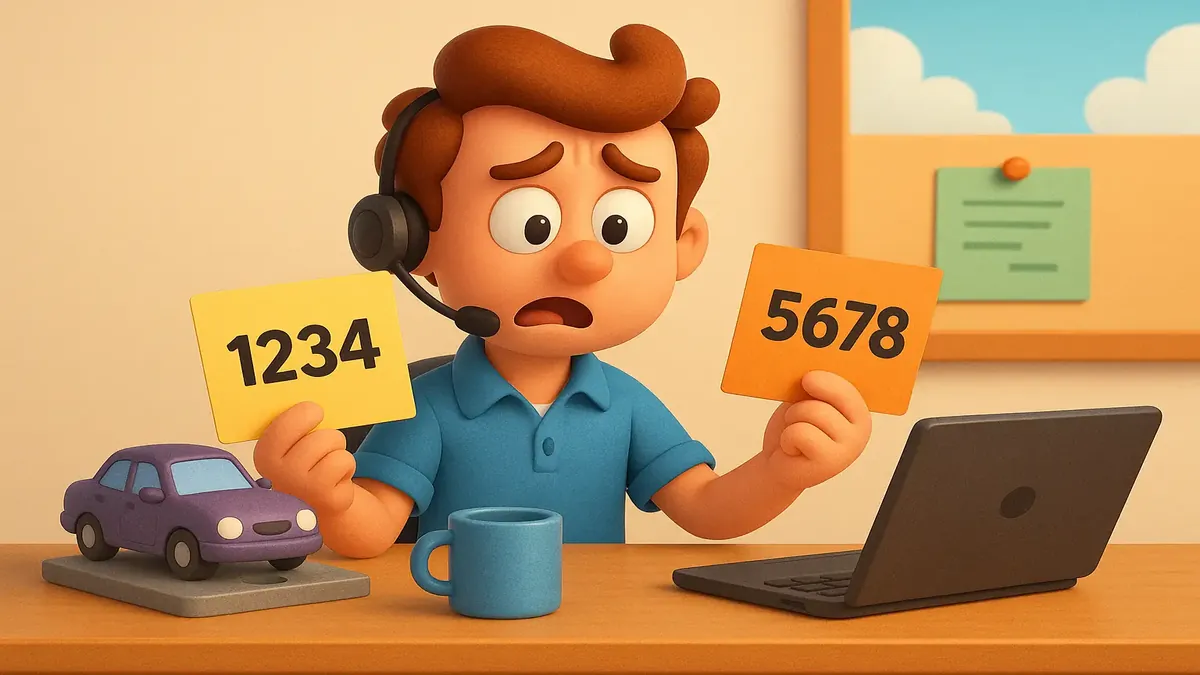
Imagine this: you’re sitting in a frigid Detroit conference room, bracing yourself as representatives from one of the Big Three automakers take turns roasting your team over “bad part numbers.” You check your logs, scratch your head, and then discover the real culprit: a single letter “O” masquerading as a zero in a critical part number, all because someone, somewhere, thought it was a good idea. Welcome to the wild world of automotive tech support, where a single keystroke can spark corporate chaos.
If you’ve ever struggled to tell a zero from an “O” (or a one from an “I” or “l”) on a dimly lit CRT monitor, you’ll feel right at home. This is the tale of how a simple, avoidable decision turned EDI (Electronic Data Interchange) into a battlefield—and left an army of techies shaking their heads.
A Comedy of Errors: When Part Numbers Go Rogue
The original poster, u/critchthegeek, paints a vivid picture: “My company made both OEM and dealer aftermarket auto parts. Same physical part, just some went directly to the factory and some went to the company's dealer repair part distribution. Two different orders and two different shipments.” So far, so good. But here’s where it gets spicy: every shipment required a timely EDI update, sent from a creaky PC in shipping, complete with a 56k modem and a dedicated phone line. If anything hiccuped, tech support was on speed dial.
It was all manageable… until the angry calls started. Suddenly, the customer (a major automaker whose name rhymes with “F***d,” but let’s not point fingers) accused the company of sending “bad/incorrect data.” The logs looked fine. The data looked fine. The meetings, however, were anything but fine.
After a 45-minute Detroit grilling, the real issue came out: the part numbers for repair orders were “wrong.” The punchline? They weren’t wrong—at least, not in the way anyone expected. The only difference: someone at the customer’s company decided that, for repair parts, the “0” in the part number should become an “O.” That’s right: same part, same physical product, but one tiny alphabetic swap. As u/critchthegeek put it, “some brain child in one of the Big 3 decided it was a good idea to use the letter 'O' instead a zero in their part numbers... try getting that idea through to third shift shipping clerks.”
Zeros, Ohs, and Other Tech Support Nightmares
If you think this sounds like a one-off blunder, think again. The Reddit hive mind chimed in with their own tales of alphanumeric agony.
u/frac6969 shared a saga from the world of communication cables, where part numbers mixed “O”s and “0”s, “I”s and “1”s, leaving non-engineers in a continual state of confusion. After the company adopted an ERP system, errors multiplied until the engineers were finally forced to simplify the numbering scheme—much to everyone’s eventual relief.
Then there’s u/Turbojelly, who recalled the pain of manually logging serial numbers from over 50 CRT monitors, all bristling with ambiguous characters: “8/B, O/0, I/1/l, all used. Was a massive fing pain.” It’s a wonder any of these companies made it out of the 90s with their sanity intact.
But not everyone has seen this alphabet soup in the wild. As u/brash21361 pointed out, “I have never seen an auto part that uses an o. Its always a zero.” To which the OP slyly replied, “Won't name names, but it is F**d's offices.” The mystery deepens!
EDI: The Unsung (and Underappreciated) Hero
You might be wondering—what exactly is EDI? As u/ctesibius explained, EDI stands for Electronic Document Interchange, a standardized way to transmit orders, invoices, and shipping notices between companies. It’s the digital glue holding together modern supply chains. The OP elaborated further: “Things like 850 Purchase Orders, 810 Invoices, 856 Ship Notice… Used it for automotive, wholesale floor mats, grocery distribution, etc.” In other words, if you’ve ever wondered how two giant corporations manage to talk to each other without everything descending into chaos, EDI is a big part of the answer.
But as u/gertvanjoe observed, “They have the brains to implement these fancy systems yet can't control the input validation on their part system. Go figure.” Or, as u/jeffrey_f put it more succinctly: “First mistake, putting humans in between each step.”
When “Smart” Systems Aren’t So Smart
It’s not just the auto industry. From laptop screens (see u/lucky_ducker’s tale of identical part numbers hiding crucial differences) to serial number barcodes (as u/aj4000 lamented, “they decided that it was fine to allow both 0 and O to be check digits… Spoiler alert: It’s not fixed”), companies everywhere have struggled with the perils of poor numbering schemes.
And the consequences can be far-reaching. As u/KelemvorSparkyfox recounted, running out of valid part number types in a multinational company can lead to a months-long scavenger hunt through ERP systems, just to find an unused code that won’t break half the business’s hardware scanners. “It’s always the change that you don’t log that comes back to bite you,” they warned—a sentiment every techie knows too well.
Lessons Learned (Or Not): Don’t Mix Your Ohs and Zeros
So what’s the moral of this tale? If you design part numbers, SKUs, or serials, never, ever mix letters and numbers that look alike. Your future self—and everyone downstream—will thank you. And if you’re on the receiving end of a tech support nightmare, remember: sometimes, it’s not a system bug, or a software glitch. Sometimes, it’s just an “O” pretending to be a zero, and a whole lot of human confusion in between.
What’s your most confusing part number or SKU story? Share it in the comments below—because if there’s one thing we’ve learned from Reddit, it’s that every tech support tale is just the tip of a much bigger iceberg.
Original Reddit Post: Part numbers