The Streisand Effect Strikes Again: Wikipedia, Court Orders, and Caesar DePaço’s Vanishing Act
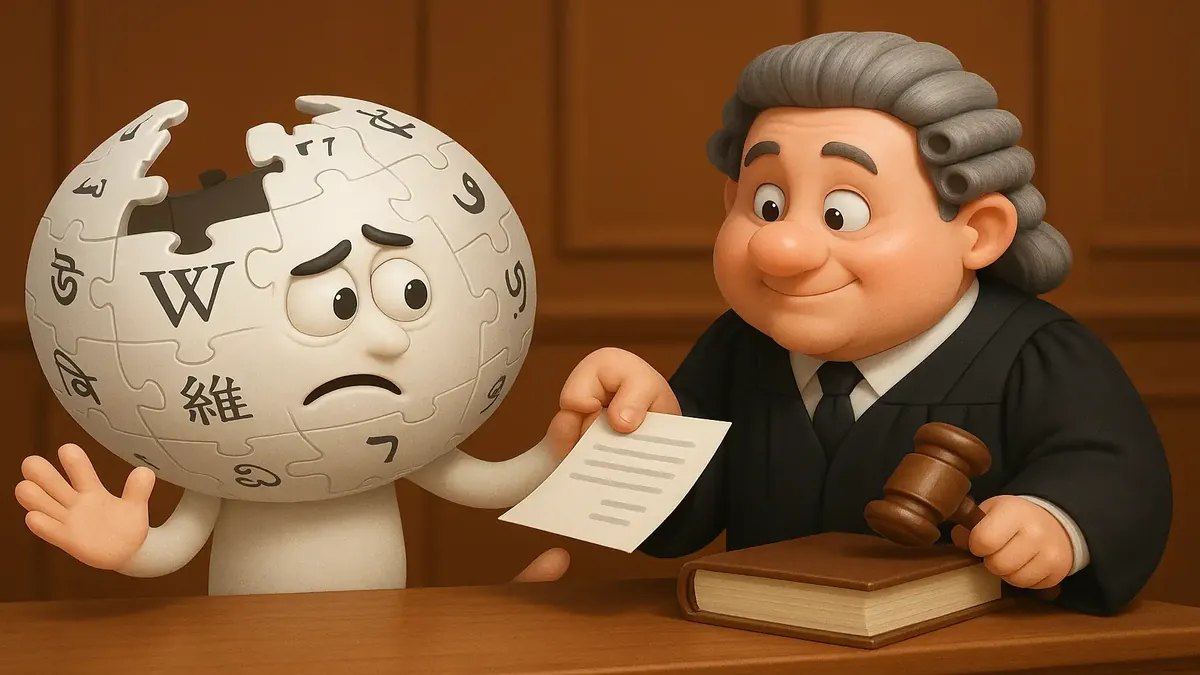
What happens when you try to scrub your online reputation—by legal force—from the world’s encyclopedia? If you guessed “everyone suddenly gets very interested in your dirty laundry,” you already understand the Streisand Effect. This week, the internet witnessed a textbook case as Wikipedia complied with a Portuguese court order to remove controversial details from the biography of businessman Caesar DePaço… and then promptly hung a giant, neon sign over the gap.
It’s a masterclass in “malicious compliance”—doing exactly what you’re told, but in the most compliant, least helpful way imaginable. But as Reddit’s r/MaliciousCompliance community gleefully dissected, the plot only thickens from there.
When the Law Meets the Internet: A Wikipedia Page Goes Missing (Sort Of)
Recently, Portuguese courts ordered Wikipedia to delete several claims about Caesar DePaço, a businessman with a checkered past (at least, according to the now-scrubbed article). Among the vanished details: allegations that DePaço was a key financier of the far-right political party CHEGA, his dismissal as Honorary Consul of Cape Verde, and a 1989 assault and robbery charge involving a girlfriend. The Wikimedia Foundation, after weighing legal obligations, obeyed the court—but not quietly.
Instead, if you visit DePaço’s Wikipedia page, you’re greeted by a massive banner:
On 5 August 2025, content from this article was removed following a court order and must not be restored. Therefore, this article may not meet Wikipedia's standards for neutrality and comprehensiveness. The removed content pertains to the following:
- Crimes allegedly committed by DePaço in 1989 and associated proceedings
- An organization DePaço allegedly founded
- His alleged dismissal from a civil service post
Imagine walking into a library, finding a biography with half the chapters ripped out, and a librarian loudly announcing, “By court order, we can’t talk about the really juicy bits.” Naturally, everyone’s curiosity is piqued.
The Streisand Effect: When Hiding Makes It Worse
If this all sounds familiar, you’ve already met the Streisand Effect. As user u/Wild_Butterscotch977 wryly observed, “It’s like this guy hasn’t even heard of the Streisand Effect.” For the uninitiated, the term comes from Barbra Streisand’s ill-fated attempt to suppress photos of her Malibu mansion, only to make the images famous overnight. As u/CrazyFanFicFan recapped: “Before the lawsuit, the picture had only been downloaded a total of 6 times. Within a month of the lawsuit, over 420,000 people had downloaded the photo.”
The DePaço case is déjà vu all over again. Redditor u/throwaway_0x90 nailed it: “And now the only reason I've heard of this dude & his crimes is because of this Reddit post.” User u/TowelFine6933 chimed in, “10 minutes ago, I didn’t know who this guy was or even care. But, since he sued, I want to know more.”
It turns out, if you want something forgotten, the last thing you should do is draw a big red circle around it. As u/FaeWhimsyGlow quipped, “Nothing screams ‘I’m innocent’ like suing Wikipedia and having them put a spotlight on what you’re hiding.”
Legal Loopholes and International Intrigue: Can You Really Erase History Online?
Behind the schadenfreude, there’s a fascinating legal dance at play. Some wondered, “Why does Wikipedia even have to listen to a Portuguese court? Aren’t their servers elsewhere?” Redditor u/OneRFeris delivered an unexpectedly thorough legal explainer: “The location of servers or corporate offices is not the primary factor in determining legal jurisdiction in claims of defamation, honor, or privacy… these claims tend to be based on where the harm is experienced by the subject.”
The Wikimedia Foundation’s compliance signals a wider trend: the so-called “right to be forgotten” is gaining traction in Europe, but not without friction. As u/blbd vented, “It’s an absolutely inane legal idea… You can’t even write an honest critical restaurant review in Germany any more without a deletion or a lawsuit because of the garbage tier speech laws various EU nations are adopting.”
Meanwhile, the internet’s collective memory is hard to erase. “Nothing dies on the internet. It remembers everything,” wrote u/Vergenbuurg, though they clarified that apathy helps—unless, of course, someone gives people a reason to care. Which is precisely what DePaço’s lawsuit accomplished.
And for those determined to dig, there’s always the Wayback Machine. As u/iwantanap__ pointed out with glee, “Thanks to the Internet Archive, we can see the original (pre court-ordered purge) versions of both the English and Portuguese versions of his Wikipedia article!” Censorship, meet your match.
Malicious Compliance: Wikipedia’s Banner of Shame
Wikipedia’s not-so-subtle compliance is a thing of beauty. By obeying the letter of the law but adding a glaring banner about the missing info, they’ve ensured any reader will wonder: “What’s so scandalous that the courts made them delete it?” As u/RomanBlood44315 noted, the page header even admits: “this article does not meet Wikipedia’s standards for neutrality and comprehensiveness.”
It’s a classic move in the world of malicious compliance—doing what’s required, but making it obvious that something is rotten. “Giant banner does have a bigger impact imo… Take this Wikipedia 🫅,” joked u/Rumenapp.
The result? Not only is DePaço’s controversy more visible than ever, it’s become a case study for the very phenomena he tried to suppress. Redditors are already calling for this story to be added to the Wikipedia pages for “Malicious Compliance” and “Streisand Effect” itself.
Conclusion: You Can’t Stop the Signal
In trying to erase his past, Caesar DePaço has instead immortalized it, proving once again that heavy-handed attempts at censorship on the internet usually backfire spectacularly. As u/superanth put it simply: “You can’t stop the signal.”
So next time you’re tempted to lawyer up against the internet, remember: sometimes, the best way to keep a story quiet is to let it die. Or, as one wise commenter’s mentor said, “A boring story dies in a few days. If you keep it alive, people will keep talking about it.”
What do you think? Should people have a right to erase their digital footprints—or is the internet’s collective memory too important to tamper with? Let us know your thoughts below, and—whatever you do—don’t go looking up those archived Wikipedia pages…
Or do. We won’t tell.
Original Reddit Post: Wikipedia's compliance with a court order.