When Cyclists Actually Obeyed Every Traffic Law, San Francisco Got a Taste of Gridlock
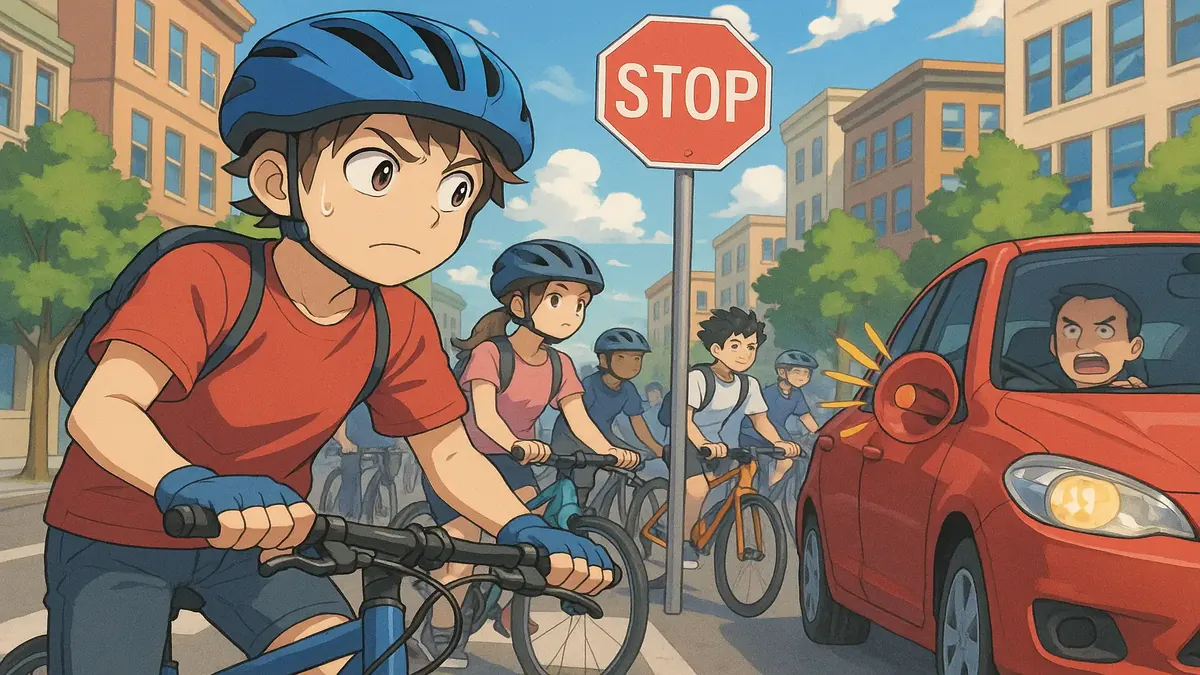
If you’ve ever biked through San Francisco’s The Wiggle—a meandering, flat route beloved by cyclists—you know it’s usually a smooth ride. But one recent evening, the city’s streets became the scene of a most unusual protest: hundreds of bicyclists collectively decided to follow the letter of the law. Every. Single. Rule.
The result? Absolute gridlock, honking galore, and a masterclass in “malicious compliance”—that is, following the rules so literally it exposes how ridiculous (or impractical) those rules can be.
The Protest That Stopped Traffic—Literally
Let’s set the stage: A local police captain had called for a crackdown on what many San Franciscans see every day—bikers rolling through stop signs, treating them more like “yield” signs. Fed up, the cycling community responded with a protest, but not one of reckless rebellion. No, this was civil disobedience with a twist: obeying the law so strictly that it brought traffic to its knees.
Picture it: hundreds of cyclists riding single file, dutifully coming to a full stop at every intersection along The Wiggle. Not a tire twitched until each rider was given the right-of-way, just as the law demands for cars. Within minutes, the city’s traffic patterns went from flowing to… well, let’s just say “utterly borked.” The first motorist honked before the protest even officially began, and the cacophony only grew from there.
Why Did This Happen?
At first glance, you’d think following the law would make everyone happy. After all, isn’t that what drivers, police, and city officials often demand of cyclists? But—as protest organizer Morgan Fitzgibbons told SF Weekly—forcing every bike to act like a car at intersections is a recipe for chaos in any neighborhood with significant bike traffic.
Here’s the paradox: cyclists ignoring stop signs can be annoying, but if they don’t—if they follow the rules to the letter and stop, wait, and go one at a time—traffic grinds to a halt. The reason? Volume plus differing speeds. A single car at a stop sign is quickly out of the intersection, but a long line of cyclists, each stopping, waiting their turn, and accelerating from zero (not a small feat on a bike), takes forever.
The Idaho Stop: Common Sense or Lawlessness?
This is where the so-called “Idaho Stop” comes in. In Idaho (and now several other places), cyclists are legally allowed to treat stop signs as yield signs. If the intersection is clear, they roll through; if not, they stop. It’s safer, more efficient, and reduces congestion. Critics call it lawless. Proponents call it common sense.
San Francisco, however, hasn’t officially adopted this rule. So, when cyclists comply with the letter of the law, the city gets a taste of what would happen if every pedal-pusher played by the book. Spoiler: it’s not pretty. The protest’s message was clear: sometimes, strict compliance is the enemy of common sense.
Malicious Compliance: When Obedience is Rebellion
What makes this story a perfect example of “malicious compliance” is that the cyclists didn’t break a single law. Instead, they highlighted how impractical the rules can be when applied without nuance. Motorists who demand rule-following from cyclists got exactly what they wanted—and immediately regretted it.
It’s a lesson in empathy, too. If you’re behind the wheel, it’s easy to get frustrated by a cyclist who rolls through a stop sign. But if you’re stuck in gridlock because every biker is stopping, waiting, and proceeding one at a time, you might start to wonder if there’s a better way.
What’s the Real Solution?
No one’s suggesting we throw traffic laws out the window, but this protest raises an important question: Should bike laws be the same as car laws? Bikes are smaller, slower, and more maneuverable. Forcing them into a car-shaped mold doesn’t always make sense, especially in bike-heavy cities like San Francisco.
Perhaps it’s time for cities to rethink how they legislate bikes—or at least listen to those who ride them every day. After all, as this protest shows, sometimes “just following the rules” is the most disruptive thing you can do.
Your Turn: What Do You Think?
Were the cyclists heroes, trolls, or both? Should cities adopt rules like the Idaho Stop? Have you ever witnessed (or participated in) a case of malicious compliance that changed a rule for the better? Share your thoughts in the comments!
Let’s keep the conversation rolling—without blocking the intersection.
Original Reddit Post: This Is What Happened When Bicyclists Obeyed Traffic Laws