When Following Instructions Goes Wrong: The Hilarious Perils of 'Using Your Own Words' in Academia
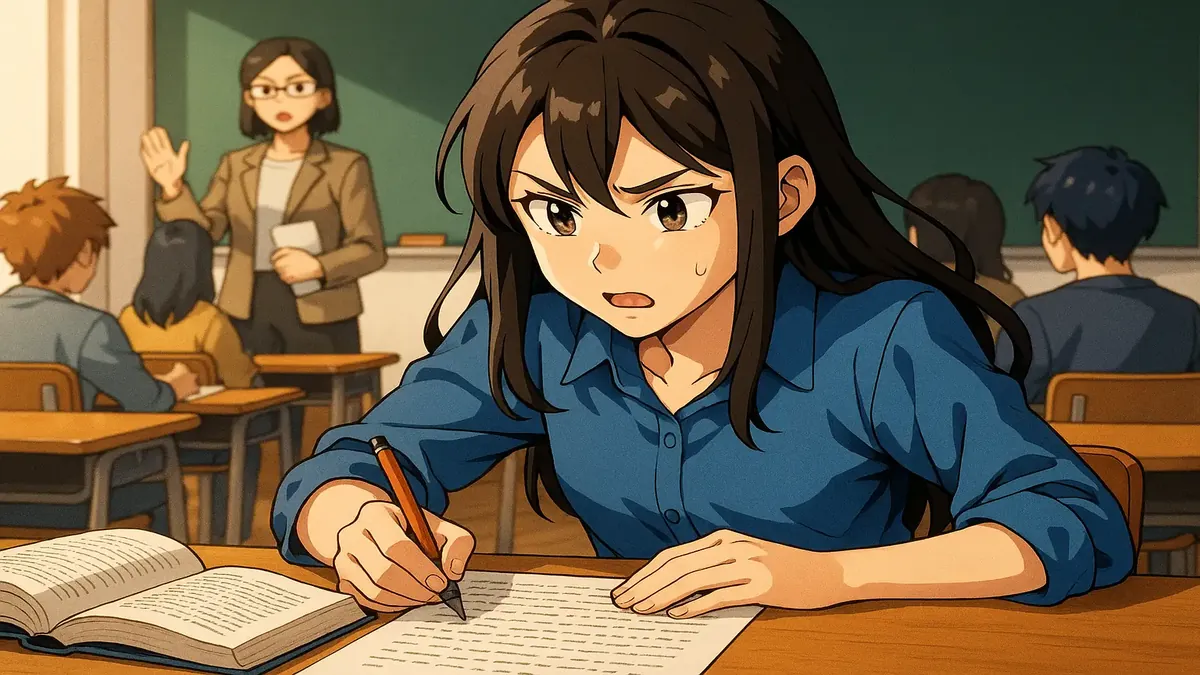
Picture this: you’re halfway through a tough university research writing course. Your professor, determined to root out academic laziness, drops a bombshell: “From now on, every assignment must be written ENTIRELY in your own words. No exceptions!” Sounds clear, right? Maybe a little too clear. For one student on Reddit, this was an irresistible invitation to take instructions to their most literal—and, as it turns out, comically disastrous—conclusion.
What happened next was a masterclass in the art of malicious compliance, student-style: the kind that is less about sticking it to the man and more about finding out where, exactly, the man will draw the line. The results? Let’s just say the line was drawn in red pen, and the internet had a LOT to say about it.
The Great Paraphrase Experiment
Our story kicks off with u/brookstonepress2, the Redditor at the heart of this academic escapade. After their professor’s stern warning about originality and an explicit order to “use your own words” for every part of every assignment, OP (as Reddit calls Original Posters) had a flash of inspiration—or perhaps mischief. When the next research essay rolled around, OP didn’t just paraphrase the concepts. No, they paraphrased everything. Quotes? Paraphrased. Citations? Disguised in vague generalities. Names and page numbers? Who needs ‘em!
Instead of writing, “As Dr. Smith asserts, ‘temperatures have increased by 2°C over the past decade’ (Smith, 2019),” OP delivered: “A scientist whose work focuses on environmental patterns suggested that temperatures had increased significantly over the past decade.” It was a research paper scrubbed clean of all direct attribution—so much so that Sherlock Holmes would have trouble tracing any idea back to its source.
Did it work? Not exactly. OP’s paper was returned with a pointed note: their citations were “non-existent” and proper attribution was required. Cue a polite (and probably slightly smug) request for clarification, and a subsequent ten-minute lecture from the professor about what “using your own words” really means.
The Comment Section: Where Pedagogy Meets Schadenfreude
Reddit’s r/MaliciousCompliance community is never short on opinions, and this post was no exception. Several commenters wondered if OP’s act of “malicious compliance” was more self-sabotage than subversion. As u/VinylHighway dryly remarked, “Shooting yourself in the foot isn’t malicious compliance and you didn’t win here.”
Others, like u/Flowerofiron, offered a practical reality check: “Not using direct quotes is standard research paper technique…You are supposed to rewrite and put it in your own words with an in-text citation. You are going to fail if you keep up this childish game.” That sentiment was echoed by u/butter_cookie_gurl, who spelled it out in all caps for dramatic effect: “YOU STILL CITE WHEN PARAPHRASING.”
But not everyone was ready to take up torches and pitchforks. u/GardenPeep pointed out, “This kind of summarizing is not a bad writing skill to have”—though the consensus was clear: even the cleverest paraphrasing still needs to show its sources.
A few commenters reminisced about their own academic battles. u/harrywwc shared, “Recently finished some post-grad study…every time I made a statement, even if paraphrased, I would cite a reference supporting the assertion. My references section would be 4 or 5 pages in length.” Apparently, academic thoroughness can be a citation arms race.
What Actually Counts as “Your Own Words”?
So where did OP go wrong? The difference between paraphrasing and plagiarism is razor-thin, especially in academia. Paraphrasing means expressing someone else’s idea in your own language, but as u/songbird121 succinctly put it, “Any and every resource on paraphrasing is going to be very clear that a paraphrased statement must also be attributed to the source it was paraphrased from.”
The key lesson: even if you’re saying it differently, if the idea isn’t yours, you need to give credit. As u/z-eldapin bluntly stated, “Not using direct quotes is fine, but you still name the ‘scientist’ and cite their work.” It’s not about copying words—it’s about tracing intellectual lineage.
The Fine Line Between Clever and Catastrophic
Was OP’s move a stroke of comedic genius or just a misunderstanding gone awry? The community was divided. Some saw it as a harmless, if misguided, experiment in rule-following. Others were less charitable, with u/Redditauro snarking, “So you pissed off your teacher for a joke that only you heard and that is not even funny…Good job!” And several, like u/special5221, reflected on their own youthful overconfidence: “I remember when I was young and dumb but thought I was smarter than everyone else.”
Still, there’s something universal about OP’s plight. Who hasn’t, at some point, tried to do exactly what was asked—only to discover that what people say and what they actually want are two very different things?
The Takeaway: Cite Early, Cite Often (and Don’t Overthink It)
So, dear students, writers, and fans of creative compliance: next time you’re told to “use your own words,” remember that academia values both original thought and respectful attribution. Paraphrase with flair, but cite with care. And if a professor’s instructions seem too literal to be true, maybe ask for clarification before you rewrite the entire bibliography in interpretive dance.
Have you ever taken instructions too literally—at work, at school, or elsewhere? Share your own tales of creative compliance (or spectacular miscommunications) in the comments below!
Original Reddit Post: My teacher said we had to 'use our own words' on every assignment. So I started rewriting every single quote and citation in my own words too.