When IT Policy Meets the Office Space Spirit: The Great Blackberry Storm Smash-a-thon
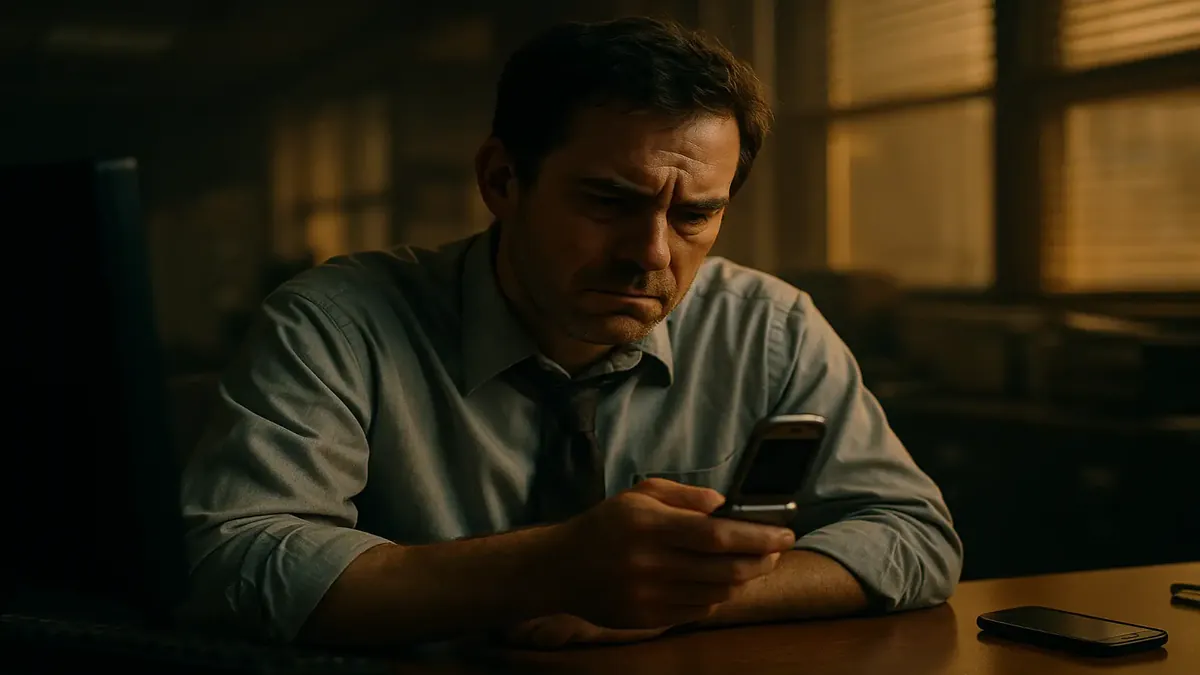
Picture this: You’re saddled with a phone so awful it makes you nostalgic for rotary dials. Your company offers a free upgrade every year, but management has decreed a two-year minimum—unless your current device is “non-functional.” Enter the Blackberry Storm, a legendary flop of a phone, and a cast of employees determined to escape its clutches by any means necessary. What follows is a symphony of accidental drops, beer-drownings, and even a riding mower cameo—all in the name of “malicious compliance.”
Welcome to the world where corporate policy meets creative destruction, and IT folks get a front-row seat to some of the most satisfying gadget carnage this side of Office Space.
The Policy That Launched a Thousand “Accidents”
Our story begins in the late 2000s, inside the IT procurement office of a large corporation. As u/MitochondrianHouse, the original poster [OP], explains, the company had a sweet deal with Verizon Wireless: free device upgrades every 12 months. But then, in a classic move to “save money,” IT management slapped down a strict rule—no device would be replaced before two years unless it was truly dead. If it still powered on and made calls, you were stuck.
And stuck employees were, especially those wielding the infamous Blackberry Storm. As OP describes, “it’s pretty well accepted they sucked, really bad, practically unusable compared to the old physical keyboards and the touchscreen was not responsive or accurate.” Imagine trying to type an email on a phone that registers ‘M’ when you tap ‘E’—every. single. time.
Malicious Compliance: The Art of “Accidental” Destruction
So, what’s a desperate Storm user to do when the only way out is a dead device? Enter the golden era of accidental gadget annihilation.
OP recalls, “More than one person just smashed their device on the floor right in front of me. One guy at happy hour plopped his into a half full glass of beer (what a waste of beer!). The best: a guy set up a sheet in his yard, and ran over his with his riding mower, and sent me a picture of the mangled shrapnel afterwards.” These weren’t isolated incidents—this was office-wide performance art, a collective act of catharsis and rebellion.
The Reddit community chimed in with their own tales of creative destruction. u/Lurker_MeritBadge recounted how their ancient laptop “fell off a rack” during after-hours work at the datacenter. Miraculously, a new one appeared days later. Meanwhile, u/barry922 confessed that their “rheumatoid arthritis” tended to act up whenever a replacement was needed—resulting in a suspicious number of dropped devices. Facilities even “confirmed a gravitational anomaly” outside their cube!
As u/plan_cart so aptly put it, “Watching people ‘accidentally’ make a Storm non-functional in front of IT is such a perfect example of how dumb policies just turn into physical problem-solving.” When the powers-that-be close the logical loopholes, employees start finding the physical ones.
Policies vs. Productivity: A Comedy of Errors
While some users delighted in the destruction, others just wanted to be left alone with their trusty, sticker-laden laptops. u/Candid-Pin-8160 bemoaned the loss of their old machine, saying, “It had all my good stickers too... The new one is just a stranger. It wasn't there when we lost half a DC, it didn't spend 18 hours with me restoring availability....” Others, like u/gimpwiz, wear their ancient hardware as a badge of honor: “The company may have depreciated it to $0 but I'm happy to use it.”
But for many, the arbitrary rules created more inefficiency, not less. As u/nunyabuziness1 noted, being forced to upgrade just before retirement resulted in a month-long productivity hit as they set up a new laptop—only to hand it back days later. And let’s not forget the age-old gripe raised by u/nunyabuziness1 and u/Coffee4AllFoodGroups: why do the least tech-savvy admin folks always get the best rigs, while IT pros get the hand-me-downs?
Lessons Learned: When Policy Meets Practice
So, who really won this game of corporate cat-and-mouse? The answer is… nobody, really—except maybe the folks who got to run over a Blackberry with a lawnmower. The policy did little to curb costs and instead fueled a wave of “malicious compliance,” with employees finding creative (if destructive) ways to force an upgrade.
Some commenters, like u/trainbrain27, argued that rewarding breakage is a mistake, and that intentional destruction should be an HR matter. Others, like u/Metalsmith21, pointed out that sometimes, pushing back—literally—against unworkable rules is the only way to get what you need.
And for those still mourning their lost “tough as a tank” tech, u/gimpwiz and u/jeepsaintchaos remind us that those old computers could take a beating—sometimes literally.
Conclusion: Smash the System—But Maybe Not the Phone
If there’s a moral to this story, it’s that rigid policies can backfire spectacularly, especially when they ignore the real pain points of employees. The Reddit hive mind delivered a masterclass in how rules meant to curb waste can end up creating it—in the form of shattered screens, spilled beer, and a trail of “maliciously compliant” gadgets.
So next time you’re staring down a device you’d rather not use, remember: Sometimes, the solution is as simple as a well-timed “accident.” Or, as one commenter put it, “Weird how many people trip outside my cube too.”
Got a story of your own office policy “compliance”? Share your tales of creative resistance (or just epic device destruction) in the comments below!
Original Reddit Post: Free device upgrade after 12 months but internal policy to not replace anything less than 2 years old... if it's 'functional'.