When Malicious Compliance Meets Algebra: The Perils of Asking the Teacher to 'Fix' Your Grade
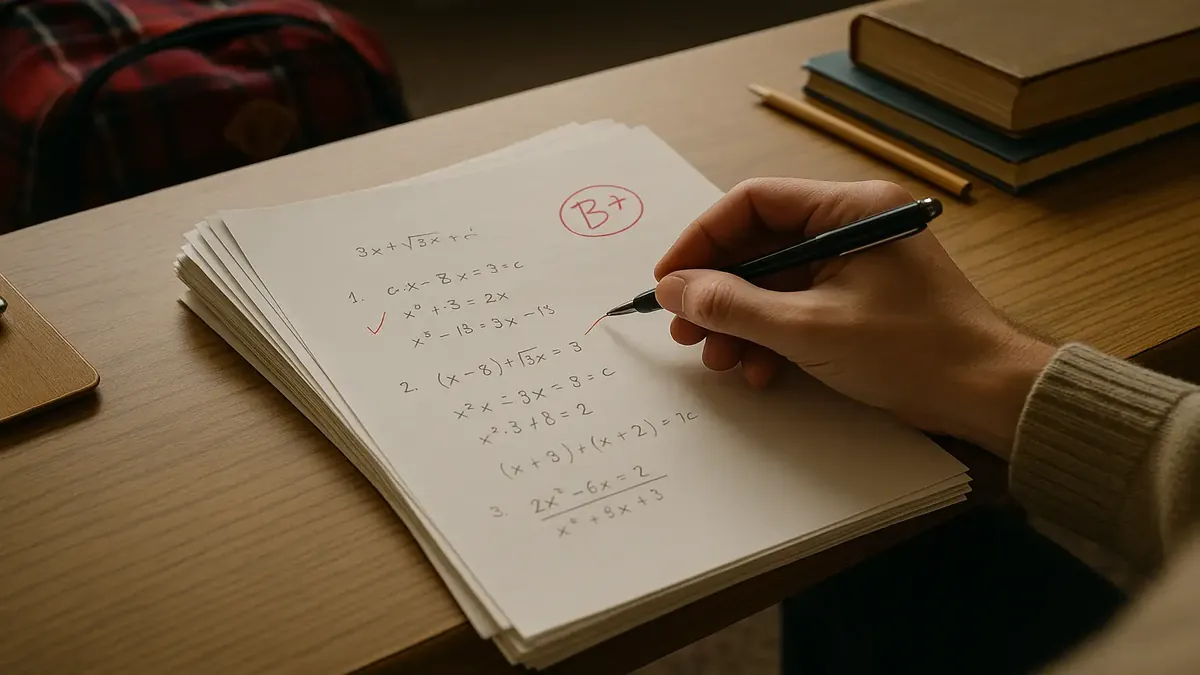
Picture this: You’re a middle school algebra student in an ultra-affluent Arizona district. You’ve just finished a big, brain-busting math test. You and your best buddy spot what looks like a grading injustice—a mistake that could mean a higher grade! Armed with righteous indignation and the confidence only teenagers possess, you march up to your teacher, slam down your papers, and demand justice.
Careful what you wish for. Sometimes, asking for a grade change can backfire spectacularly.
The Homework Hustle: A Teacher’s Survival Guide
Before we get to the fateful showdown, let’s set the stage. Our protagonist, Reddit user u/Ancient_Educator_76, is an algebra teacher with a daily mountain of homework from 130 students. Grading every single question on every assignment? Not physically possible unless cloning technology takes a leap.
So, the teacher devises a system: Assign 5–10 homework questions, but randomly select just two to grade each day. Students don’t know which will be graded, keeping everyone on their toes. Tests, of course, are graded in full. It’s a compromise between sanity and thoroughness—one that many teachers, as some commenters pointed out, have tried (with mixed results).
Not everyone is a fan. As u/popcornsalter bluntly put it, “You’re literally teaching them to be bad at math.” Others, like u/LanceLamore, worried that ungraded questions would reinforce mistakes, since students might assume unmarked answers were correct.
But as u/Ill_Industry6452, a former math teacher, shared: “If it benefitted the student, meaning I missed counting a wrong answer wrong, didn’t change the grade. But if I counted a correct answer wrong, I changed the grade. I didn’t want to encourage dishonesty.” Even the pros struggle to find the perfect system.
Enter Itchy & Scratchy: The Grade Avengers
One test day, two students—dubbed Itchy and Scratchy—spot what they believe is a teacher slip-up. Itchy’s answer to Question 4 is marked wrong, while Scratchy’s identical answer is marked right. Convinced of a grading injustice, they march up, papers in hand, like detectives ready to expose the case of the century.
“Mr. OP, as you can clearly see you have graded my answer for question 4 incorrect, but on his paper you have marked it correct,” Itchy declares, setting the scene for a classic showdown.
At this point, the teacher calmly points out that Itchy’s answer is, in fact, incorrect—showing the math and reasoning. But the students, sensing unfairness, persist. “That’s not fair! You made a mistake you need to fix it!” Scratchy insists.
Malicious Compliance: Careful What You Wish For
Here’s where things get deliciously ironic. Instead of caving or brushing off the complaint, the teacher takes both tests, compares them, and realizes—oops!—he did make a mistake. But not the one the students hoped for. Instead, Scratchy’s answer should have ALSO been marked wrong.
The result? Scratchy’s grade drops from a respectable 92 to an 83, and both students are left wishing they’d kept their detective hats in their lockers. As u/DysfnctionalbyChoice quipped, this was a classic case of “Never interrupt your enemy when he is making a mistake.” In this case, the students’ quest for fairness cost them dearly.
The teacher, expecting angry parent emails, summed it up: “Aye carumba!” (Though, as he clarified later, the dreaded email never arrived.)
The Comments Section: Roast, Debate, and a Dash of Empathy
Reddit being Reddit, the comments exploded with opinions. Some users cheered the teacher’s “malicious compliance,” finding the poetic justice hilarious. “I’ve done, or offered to do this, more than once before. It’s quite entertaining,” said u/Wonderful-Cup8908.
Others, however, were less amused. Several, like u/AntiseptikCN and u/Ok_Refrigerator_3093, took the teacher to task for what they saw as an inconsistent or unfair grading system. “Your students must hate you OP. As a teacher the one thing you have to do right is marking,” wrote u/AntiseptikCN.
There was also a lively side debate about teachers’ grammar and writing skills, with some users taking OP to task for typos and syntax. (As u/KubosKube joked, “They think that numbers are part of the alphabet.”) OP took it in stride, admitting that math teachers aren’t always grammar wizards—and that, honestly, grading mistakes happen to everyone.
But not all was criticism. A number of educators chimed in with empathy for the workload and the balancing act teachers face. As OP clarified: “This story definitely happened. More than once.” For teachers with hundreds of students, grading every answer, every day, just isn’t realistic.
Lessons Learned: Fairness, Feedback, and the Human Side of Teaching
So, what’s the takeaway from this algebraic adventure? For students, sometimes it’s wise to let sleeping grades lie—unless you’re certain you have the upper hand. For teachers, it’s a reminder that transparency, consistency, and feedback are vital (and that Reddit will catch every typo you make).
Perhaps the real lesson is that education, like life, is messy. Mistakes happen. Systems aren’t perfect. Sometimes, fairness cuts both ways. As one commenter, u/Narrow_Employ3418, mused: “Consistency is just... a literary device. An illusion at best.”
Whether you side with the teacher, the students, or the peanut gallery, one thing’s for sure: The next time you ask to have your grade “fixed,” make sure you’re not accidentally fixing yourself right out of an A.
What’s your take? Should teachers grade every answer, or is the random spot-check system a necessary evil? Ever had a grade change backfire? Drop your story in the comments—just don’t ask us to fix your typos.
Original Reddit Post: Change the grade