When the Boss Thinks You’re Useless—Then Realizes He Can’t Keep Up: A Toy Store Tale of Malicious Compliance
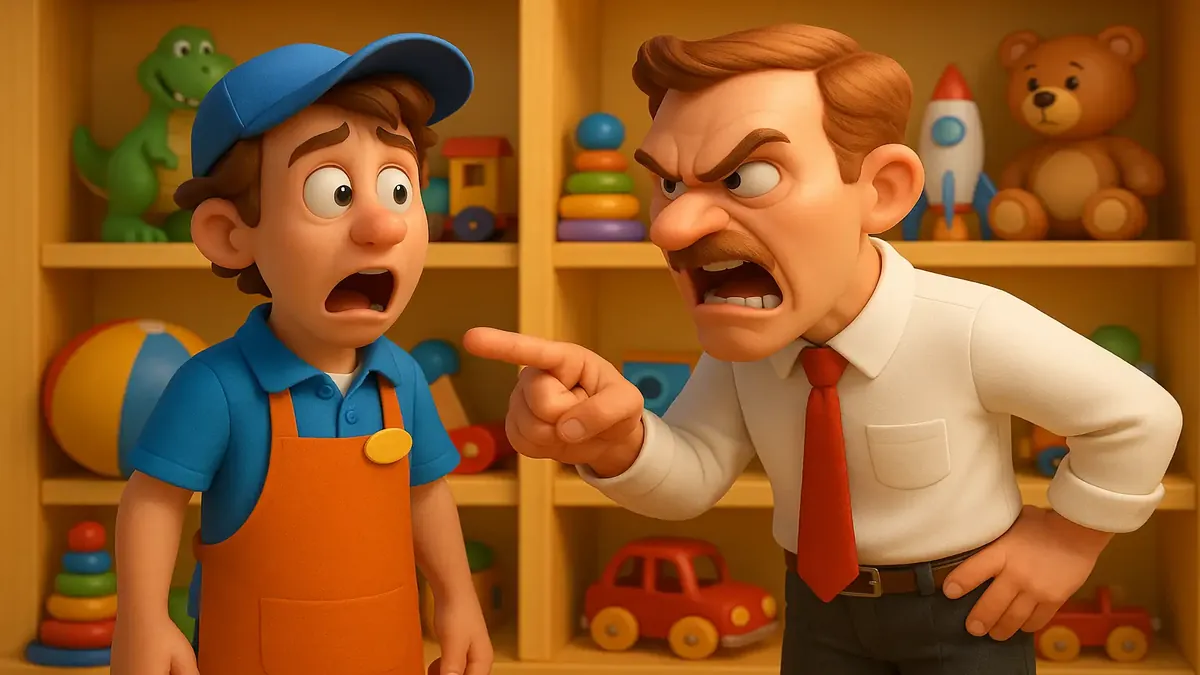
If you’ve ever worked retail during the holidays, you know it’s a battle zone—especially in a toy store as Christmas looms. Picture this: frazzled parents, kids hyped on cocoa, and a never-ending sea of refunds and exchanges. Now, add a district manager who’s never set foot on the sales floor, but is convinced you’re slacking off. What could go wrong? As it turns out, quite a lot—until real-world experience delivers a dose of humility.
This is the true story of one overworked employee, one skeptical manager, and how a day of “malicious compliance” (with a dash of holiday chaos) led to a lesson in what really happens on the retail frontlines.
The Setup: District Manager vs. Christmas Chaos
Our protagonist, Redditor u/Theory_Large, found themselves manning the “Boys’ Toys” section—a veritable war zone of action figures and flying Nerf darts—during the busiest time of the year. But unlike their coworkers, this employee was also the only non-manager who could process refunds and exchanges. And with the refund desk right next to the tills, guess who got called away every five minutes?
Enter “D,” the district manager. Armed with a business degree but zero floor experience, D arrives just before close, spots a messy aisle, and—ignoring all explanations—labels our hero “useless.” As one top commenter, u/bsb_hardik, put it: “Bad of him to not hear the explanation in the first sense!” D’s solution? Shadow the “problem” employee the entire next day to “show her what’s what.”
The Showdown: Walking a Mile (or Several Laps) in Her Shoes
The next day, D’s hands-on management experiment begins. Within minutes, he’s interrupted by the first of many till calls—refunds, exchanges, the whole Christmas circus. D gets to experience the full glory of running between the stockroom, the shelves, and the tills, tidying up after tiny tornados, and barely squeezing in a late lunch because of a last-minute refund.
What’s brilliant here is that our protagonist doesn’t resist, argue, or protest. She simply lets D learn firsthand just how impossible the job is when you’re covering two roles at once. As u/Clocktopu5 quipped, “Of all departments to risk doing refunds, choosing Boys’ Toys is crazy. I would guess that section to be chaotic even without having to step away.”
By day’s end, D is exhausted, the section is still messy, and the reason is crystal clear: The real problem isn’t lazy staff—it’s understaffing and poor support. As u/Nematrec summarized, D “Saw an issue and decided to do something about it (good); Ignored explanation from experienced worker (bad); Investigated issue (good); Provided extra labor when clear there wasn’t enough (good)... Final grade, B+, room for improvement.”
Lessons Learned (and Not Learned): The Power—and Pitfalls—of Management by Walking Around
Here’s where things get interesting. D never apologizes—privately or publicly—for calling out the employee. As u/Virtual_Entrance6376 and many others pointed out, when you reprimand someone in public, the apology should be just as loud. “Reprimand in private, celebrate in public,” chimed in u/failed_novelty. But while D skips the “I’m sorry,” he does take action: The next morning, management assigns an extra staff member to Boys’ Toys, and managers are directed to help more at the tills.
Is that enough? The community is split. Some, like u/Merithay, argue that “an apology consisting of actions to fix the problem is more meaningful.” Others, like u/Quirky-Tangelo2806, note that coworkers might assume the extra staff means OP was incompetent, not overworked—a communication fail that could have been fixed with a simple, public acknowledgment.
And then there’s the humor. “This is like an episode of Undercover Boss,” wrote u/sonic13066, except OP doesn’t get a surprise check or a vacation—just vindication and (hopefully) a less stressful workday.
The Retail Frontlines: Why Listening Matters
The story’s not only about one manager’s misstep—it’s a snapshot of a wider problem in retail and corporate life. “Never worked the floor a day in his life but had a business degree,” scoffed u/Postcocious, who shared a similar tale about MBAs trying to “fix” jobs they don’t understand. Others, like retired line manager u/Sterek01, distilled the lesson: “Always listen to the person at the rock face doing the work as they have the real knowledge.”
Ultimately, D did what many managers never do: He got hands-on, learned the real challenges, and fixed the staffing issue. As u/UnknownHero2 pointed out, “Realized the employee wasn’t the problem and took reasonable and helpful steps to fix the problem. Yeah, they should have apologized, but that’s about the only thing I see that they did wrong.”
Conclusion: Sometimes the Best Apology Is Real Change (But Words Help Too)
So, what’s the takeaway from this chaotic Christmas in the toy aisle? Sometimes, the best way to prove your worth is to let the work speak for itself—and let your boss try to keep up. While D missed an easy opportunity to model humility with a public apology, his willingness to get his hands dirty and implement real change won him reluctant respect from staff and Reddit alike.
Have you ever been underestimated by a boss—or had a manager finally see things from your perspective? Share your stories below! And remember: The next time someone says you’re “useless,” hand them your apron and sit back. The truth will set you free—and maybe even lighten your workload.
Happy holidays, retail warriors. You’ve earned it!
Original Reddit Post: Manager said I was useless at my job, showed him exactly why