Zed vs. Zee: The Great Linguistic Standoff That Confused a Continent
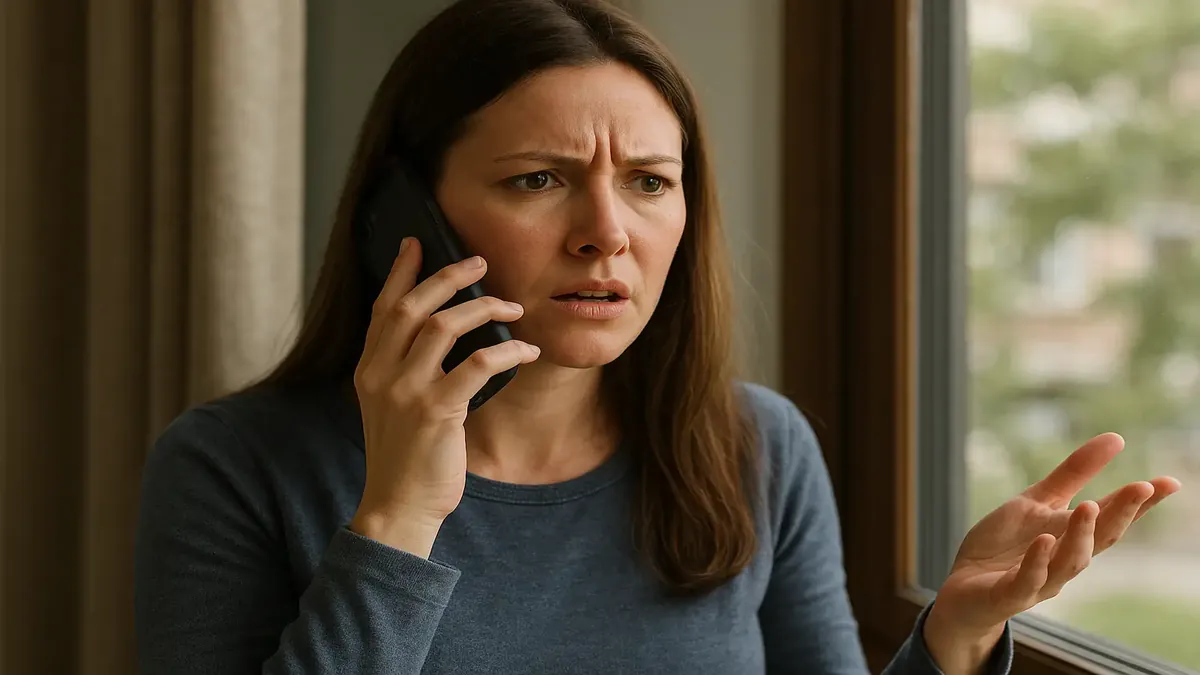
Picture this: You're working your retail job in Canada, answering the phone as usual, when suddenly, a simple tracking number becomes the catalyst for a cross-border linguistic misunderstanding. What happens when "zed" meets "zee"? If you're the hero of this viral Reddit tale, you might not even realize the confusion until the call is over!
It’s a story that’s as much about the quirks of English as it is about the delightful awkwardness of everyday human interaction. Buckle up—because you’re about to witness a cultural collision, one consonant at a time.
The Phone Call Heard ‘Round the World
Our story begins innocently enough, with Reddit user u/DisastrousTarget5060 (OP) picking up the phone at a Canadian store. On the other end: an Arizona man, eager to track down a missing package for a friend. The conversation starts off routine—until the tracking number comes into play.
The Arizona caller reads out the code: “1234Z6789.” OP, ever the diligent Canadian, confirms, “Just to confirm, the number is 1234 ‘zed’ 6789?”
Cue confusion.
“No, it’s 1234 ‘zee’ 6789,” insists the caller.
“Yes, 1234 ‘zed’ 6789,” OP responds, still not catching on.
The two go back and forth, each growing increasingly bewildered, locked in a polite (but slightly exasperated) standoff. Only after the call ends does OP realize what just happened: the classic “zed” vs. “zee” divide had struck again.
Why Is Zed So Confusing? A Cultural Crash Course
If you’re American, you might be wondering why anyone would say “zed.” If you’re from Canada, the UK, Australia, or pretty much any Commonwealth country, you’re probably wondering why Americans insist on “zee.” The difference is so fundamental that, as one top commenter, u/DerHoggenCatten, pointed out, “I would never overestimate how cosmopolitan people who do customer phone service are. He may genuinely have believed you had the number wrong in some way (like you thought it was ZED or ZD).”
The confusion runs deep. As u/Cholinergia chimed in, “In my experience, Americans have mostly never heard of ‘zed.’” Even among Americans who have encountered it, the knowledge often comes from pop culture: Stargate fans, for example, know the “Zed-P-M” (Zero Point Module), while others recall learning about “zed” from rock songs or children’s TV. As u/BrianWulfric confessed, “I learned it from The Clash’s song ‘Jimmy Jazz’ where Strummer spells out the word ‘jazz.’”
But many Americans go their whole lives without hearing “zed.” Some, like u/Square_Medicine_9171, only discovered it in high school—or, hilariously, attributed it to another language entirely. “I was learning German and assumed it must be in German. I said I didn’t understand and could she say it in English? She was exasperated with me saying, ‘It IS English! Zed! Zed!’”
For Canadians, though, the word “zed” is so ordinary that the confusion doesn't even register. As u/Deep_Panda_833 explained, “We hear both zed and zee daily here and Canadians understand it’s the same thing and wouldn’t necessarily jump to the conclusion that someone else didn’t know something that to us is extremely basic knowledge.” OP themselves clarified after the fact that they weren’t intentionally correcting the caller—they just didn’t realize what the fuss was about until the line went dead.
The Community Reacts: Laughter, Linguistics, and Lord Zedd
Reddit, of course, had a field day. Some users couldn’t resist the pop culture references: “Zed’s dead, baby!” quipped u/hogsucker, riffing on the classic Pulp Fiction line (and, as u/another-princess noted, ironically delivered by an American character).
Others wondered how Canadians handle American band names. “What do Canadians call that band with the two guys with the long beards?” asked u/hogsucker, to which the consensus was: “Zee Zee Top,” because even Canadians know when to switch to “zee” for proper nouns.
Then there were the practical jokers and realists: a few, like u/PaintDrinkingPete, advocated for the phonetic alphabet (“1234-Zulu-6789”) to avoid confusion entirely. Meanwhile, u/NeighborhoodVirtual4 made an impassioned case for adopting “zed” in America: “Too many letters end with the ‘ee’ sound anyway, we should adopt zed too, honestly.” (Just imagine the alphabet song in America if “zed” replaced “zee”—the rhymes would never be the same!)
And, as u/Deep_Panda_833 insightfully pointed out, sometimes switching pronunciations for the sake of clarity can backfire: “Altering your pronunciation of a word to match someone else’s dialect or accent can also easily be taken as making fun of them.”
More Than a Letter: Why Little Differences Matter
So what did we learn from this alphabetic adventure? Sometimes, the smallest cultural differences can lead to the biggest misunderstandings. Whether it’s “zed” vs. “zee,” “washroom” vs. “restroom,” or even how to spell “colour,” these quirks are what make language, and life, interesting.
But maybe, as u/OMWinter mused, “Since you both knew what the other was saying, who cares?” The real joy is in the moment of realization—when you finally “clock” what the other person meant, and the world suddenly seems a little bigger (and a lot funnier).
So next time you’re on the phone, spelling out a tracking number or your email address, spare a thought for your international friends. And if all else fails, just use the NATO phonetic alphabet. (Or, you know, have a good laugh about it later.)
Conclusion: Zed, Zee, and You
Have you ever been tripped up by a linguistic quirk—at work, while traveling, or even just chatting online? Share your stories in the comments! The next time someone says “zee” or “zed,” you’ll know exactly what they mean—and maybe, just maybe, you’ll have a great story to tell.
After all, as one wise Redditor put it: “If you make something idiot-proof, someone will just make a better idiot.” Or, perhaps, a better story.
Which do you say—zed or zee? And what’s your favorite cross-cultural language mix-up? Drop your answer below!
Original Reddit Post: It's not 'zed' it's 'zee'